


2027 Event Trends to Plan For
Last Updated on October 1, 2026
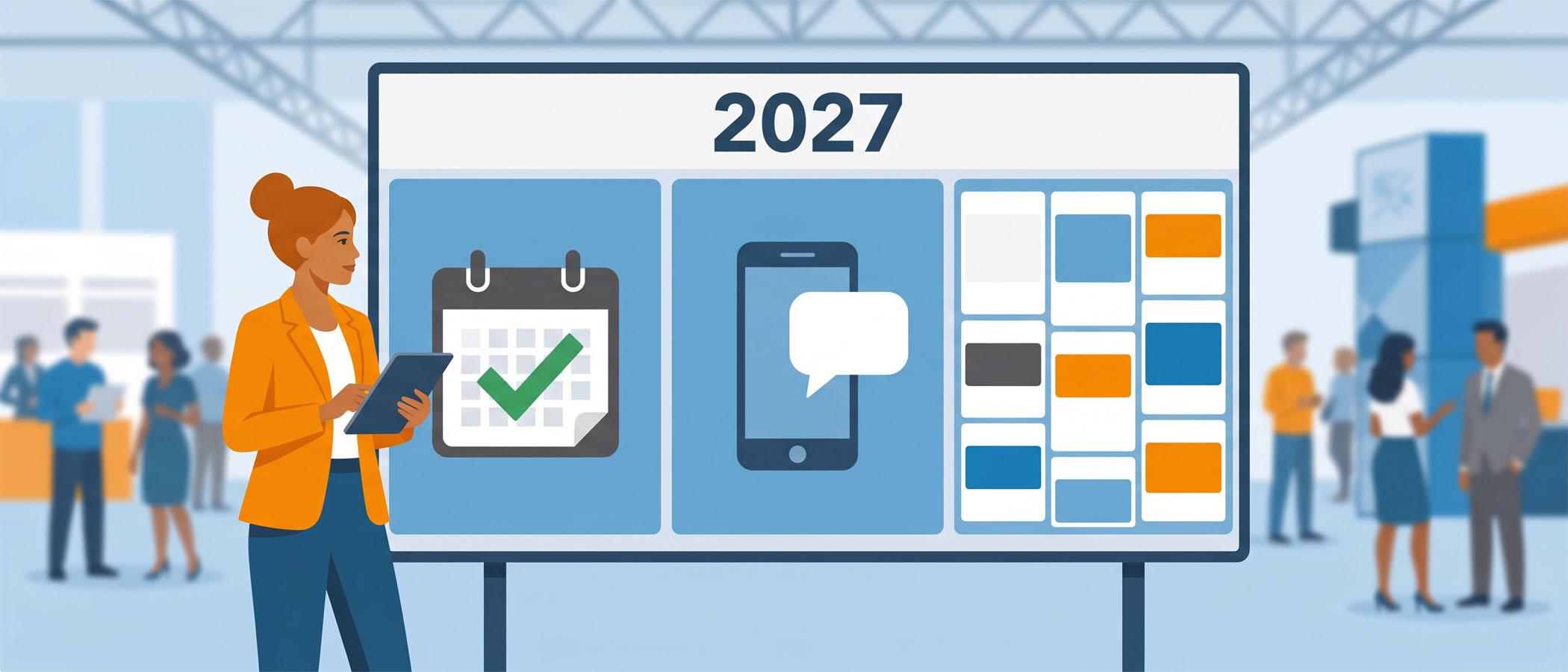
If you are building your budget for next year right now, deciding which 2027 event trends to plan for means making a bet. You are guessing which parts of your event will pay off and which parts will sit unused. The events that do well in 2027 will not be the ones with the biggest screens or the flashiest opening video. They will be the ones that planned exactly how attendees take part, step by step, the same way you plan catering or seating.
On one side are events that design participation on purpose, on the other are events that put people in a room and hope something happens. The 2027 event trends below all point in that same direction, and each one comes with a key takeaway on what it means for you and a link to read more about it, if you’d like. If you read our event trends article in 2025, think of this as the next chapter, with more focus on getting people involved.
Trend 1: Participation Gets Planned Like Logistics
For years, engagement was treated as a happy accident. You booked a good speaker, and if people asked questions, great. In 2027, that thinking is going away. Planners are starting to treat participation as a scheduled task with owners, deadlines, and a spot on the run-of-show.
This matters because attention is harder to hold than it used to be. Research from Microsoft has been widely cited on shrinking attention spans, and whether you take that number literally or not, event teams feel the effect in the room every day.
Key takeaway for event planners:
Put participation moments directly on your agenda. Decide when people will post, poll, or answer a question, and assign someone to run each one. Our guide on using your event agenda to drive participation walks through how to place these prompts so they feel natural instead of forced. When you plan the moment, you stop hoping for it.
Trend 2: Private and Non-Social Participation
Not everyone wants to post to their public followers at a work event. Sales reps, teachers, doctors, and government staff often can’t or won’t share company moments on their personal accounts. For a long time, that meant a big chunk of the room simply opted out.
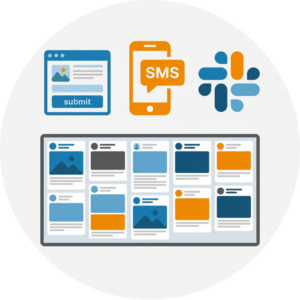 The fix showing up in 2027 is participation that does not touch public social media at all. Attendees post through a web form, a text message, or a private feed that only shows up inside the event. Nothing goes to X or Instagram unless they choose it.
Everwall’s social walls support this directly. Alongside the usual networks like X, Instagram, and LinkedIn, they include Everwall Direct (a simple web form) and SMS, so people can send a photo or note without a social account. We wrote about exactly this setup for internal meetings in our piece on running a private sales kickoff social wall.
Key takeaway for event planners:
Events are about people and their connections, and just because you can get people to be “social” at an in-person event, doesn’t mean that you can get them to participate on social media. In fact, many people want the exclusively “private” feeling an event can provide. If half your audience won’t post publicly, a public-only wall reaches half your room. Offering a private path, through a QR code and a web form, brings in the people who were always going to stay quiet otherwise. More on that approach here: getting attendees to post without social media.
Trend 3: Engagement as Sponsor Inventory
Sponsors are asking harder questions about what they get for their money. A logo on a banner is easy to ignore, and sponsors know it. What they want now is proof that their brand was part of something people actually did.
This is turning engagement into something you can sell. A live poll, a photo prompt, a social wall, or a Q&A session can all carry a sponsor’s name. Instead of selling space people just walk by, you sell active moments with their brand front and center.
As these 2027 event trends take shape, here are a few engagement spots planners can package for sponsors:
- A branded social wall shown on the main screen between sessions
- Sponsored polls where results appear near the sponsor’s logo
- Sponsor messages on agendas that everyone refers to
- A photo prompt tied to a sponsor’s booth or lounge
- Video overlays with sponsor sizzle reels
- A post-event recap page that keeps sponsor moments visible after everyone goes home
We break down the money side of this in why you should treat engagement as a revenue metric, and the ROI of social walls covers how sponsorship offsets the cost.
Key takeaway for event planners:
Price your engagement moments the way you price booth space. A sponsor will pay more for a poll that 400 people answer than for a sign 400 people walk past. Build these into your sponsorship deck before you sell it.
Trend 4: Hybrid Parity, Not Hybrid Afterthought
Hybrid events are not new. What is new is the expectation that remote attendees get the same experience, not a lesser one. For a while, virtual attendees were treated like they were watching from the cheap seats. A camera pointed at a stage, a chat box nobody watched, and that was it.
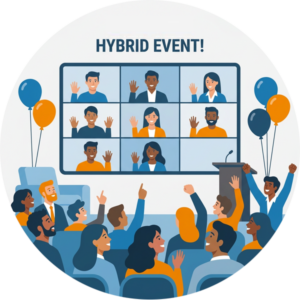 In 2027, “hybrid parity” is the goal. Remote and in-person attendees see the same content, join the same polls, and appear on the same wall. The event feels like one shared thing instead of two separate ones.
Key takeaway for event planners:
Pick tools that treat both audiences equally. A social wall that both groups can post to, and that both groups can see, does a lot of this work at once. Everwall’s event social walls include a website embed at no extra cost, so the same wall running on the big screen can also live inside your event app or on your event page for people at home. We covered this in detail in how hybrid event social walls bridge live and virtual audiences.
Trend 5: AI in Event Operations, With Humans in Control
AI is now part of how events run behind the scenes. It helps sort posts, flag ones that need a look, draft agenda updates, and speed up moderation. What it is not doing, and should not do, is run the room by itself.
The pattern that works is to keep humans in charge. AI handles the slow, repetitive parts so the human running your wall or your polls can focus on judgment calls. A study from Deloitte on AI adoption in enterprise settings points to this same split, where AI speeds up tasks but people stay accountable for the outcome.
Key takeaway for event planners:
Use AI to save time, not to remove people. Everwall built an AI tool for social wall management that helps moderate posts and run polls faster, while a human still approves what goes on screen. For a wider look at where the line sits, read AI in events: what it can’t replace.
The moderation piece matters most here. A single bad post on a big screen can sink a session, so keeping a human on the approve button is not old-fashioned. It is smart.
Trend 6: Real Attendee Content Beats Polished Video
Attendees trust each other more than they trust the brand on stage. A shaky phone photo from someone in the audience often gets more attention than a produced highlight reel, because it looks real.
This is pushing planners toward user-generated content, the posts and photos attendees make themselves. Nielsen’s long-running research on trust in advertising has consistently shown that people trust recommendations from other people far more than branded messages, and that same instinct shows up at events.
Key takeaway for event planners:
Give attendees clear instructions for where and how to share, then show what they posted in visible ways. A social wall does both. It collects real posts and puts them where the room can see them, which encourages more people to join in. We dug into which formats work best in user-generated content trends 2026.
A quick note on making it easy: the fewer steps between “I want to share this” and “it’s on the screen,” the more people will actually do it. A visible QR code and a one-line prompt beat a long set of instructions every time.
Trend 7: One Platform Over Five Separate Apps
Planners are tired of stitching together a polling app, a photo app, a Q&A tool, and a separate display, then hoping they all talk to each other. Every extra login or new interface is another thing attendees might decide to skip and another vendor invoice for you.
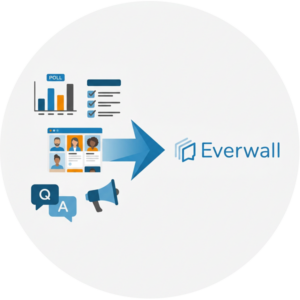 One of the most practical 2027 event trends is the move toward fewer tools that do more. One platform that handles posts, polls, and the display cuts setup time and gives attendees a single place to take part. Our team wrote about this trade-off in the sales kickoff engagement tools worth paying for in 2027.
Key takeaway for event planners:
When you compare tools, count the logins your attendees will need (if any). Every one you remove lifts participation. A platform with 16 content sources and a dozen layouts, like Everwall’s event social wall, covers a lot of ground without adding apps the user has to download to the pile.
Putting 2027 Event Trends Into Your Budget
Look back at these seven 2027 event trends and one theme runs through all of them: planned participation. Private options for people who won’t post publicly. Engagement you can sell. Equal footing for remote guests. AI that helps a person instead of replacing one. Real content over polished content. Fewer tools doing more.
None of these require a huge budget. They require a decision, made now, about whether your event will design how people take part or leave it to chance. That is the divide for 2027, and the planners who choose to design it will have the room with them.
If you want a fuller checklist as you plan, our complete guide to conference engagement tools lays out what to look for and how to measure whether it worked.
Ready to build participation into your next event instead of hoping for it? Everwall’s event social wall collects posts from 16 different sources, including private options like SMS and a simple web form, and shows them live on your screen and inside your event app at no extra cost. Take a look and see how it fits your 2027 plans.
Pretty good, right? Share this with your people.


