


What Association Sponsors Will Pay for a Social Wall
Published on October 5, 2026
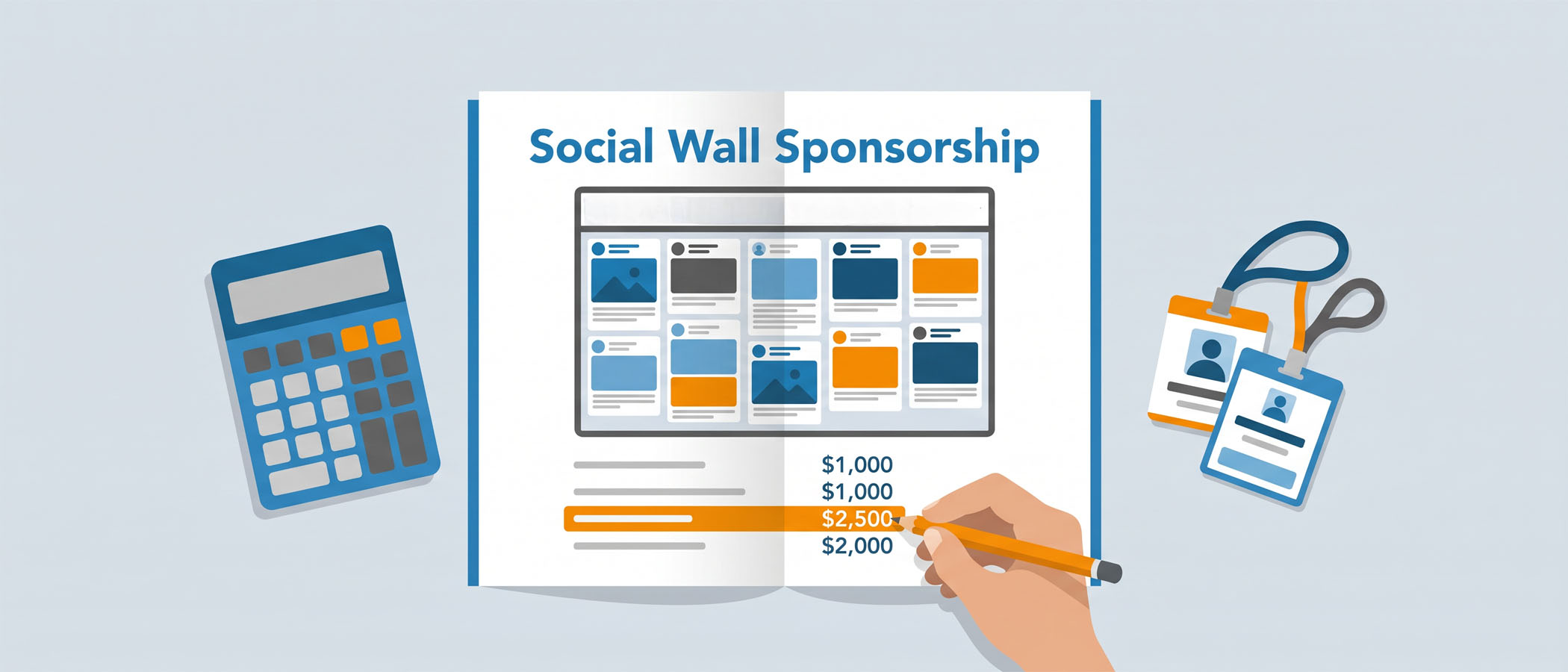
Pricing season is stressful. You are staring at a blank line in your sponsorship prospectus, and someone on your committee wants to know what to charge for the social wall. Guess too high and it sits unsold. Guess too low and you leave money on the table for a whole year. The good news is that you do not have to guess at all. Real associations publish their sponsorship rates in public prospectuses every year, and once you see what they charge, setting your own social media wall sponsorship price becomes a lot easier.
This article walks through the published benchmarks, how to price the wall based on your own event, what belongs in each package, and why the margins are better than most people expect.
What Associations Actually Charge for a Social Wall Sponsorship
The first thing to understand is that a social wall is real sponsorship inventory. It is a screen that people look at all day, and sponsors will pay to put their logo on it. When you look at published prospectuses, the range is wide but the pattern is clear.
On the lower end, some associations bundle a social wall or “social media feed” sponsorship into packages that run around a thousand dollars for a single day. On the higher end, larger conferences price the same type of inventory in the five figures for the full event.
Demand is real, too. It is common to open a prospectus and find the social or digital sponsorships marked “SOLD” or “SOLD OUT,” which tells you these are not hard sells when they are priced and packaged right. That is the single most useful signal for your own pricing: if comparable events are selling out of this inventory, you have room to price with confidence.
A few takeaways from the published numbers:
- The observed range runs from roughly $1,000 per day on the low end to five figures for a full multi-day event.
- Bigger audiences and longer events push the price up.
- Exclusive, single-sponsor deals cost more than shared or logo-only placements.
How to Set Your Own Rate
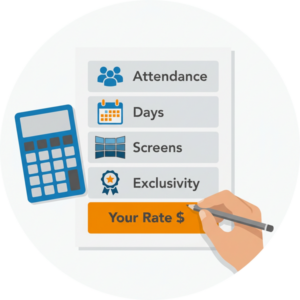
Benchmarks give you a starting point, but your number should reflect your event. Four factors do most of the work.
Attendance
More people means more eyes on the screen, and more eyes means the placement is worth more. A regional chapter meeting with 150 attendees cannot charge what a national conference with 4,000 attendees charges, and it should not try to. Use your registration numbers as the anchor. If a sponsor is paying for exposure, the size of your audience is the clearest thing they are buying.
 Days
Days
Price the wall per event day, then adjust for the full run. A three-day annual meeting gives a sponsor three days of logo exposure, three days of attendee posts, and three keynote sessions where the screen is on the main stage. That is worth more than a single-day workshop. Many associations quote a full-event rate, but they are quietly multiplying a daily value in their heads. You should do the same.
Screen Count and Placement
Where the wall shows up changes what it is worth. A social wall on the main stage between sessions is premium placement. The same wall tucked into a hallway near the restrooms is not. Count your screens and rank them:
- Main stage or general session — highest value, seen by everyone at once.
- Registration and lobby — high traffic, first impression, seen repeatedly.
- Networking areas and lounges — steady attention during breaks.
- Hallways and secondary screens — supporting exposure.
A sponsor buying a logo on every screen for the whole event is buying far more than a sponsor buying one hallway monitor. Charge accordingly.
Exclusivity
A single-sponsor social wall, where one company owns the logo spot and no one else appears, is your top-tier offer. It should carry your highest price. If you sell the wall to several sponsors who rotate, each spot costs less, but the total can add up to more. Decide which model fits your event before you set the number, because exclusivity is often the difference between a $2,000 package and a $10,000 one.
What Goes in Each Price Level
A sponsor paying more should get more. If your packages all deliver the same thing, sponsors will always pick the cheapest one. Here is a simple way to structure deliverables so the price ladder makes sense.
 Entry level (roughly $1,000 to $2,500). Logo displayed on the social wall throughout the event. The sponsor’s name appears in the wall’s branding, and their posts using the event hashtag show up in the feed alongside everyone else’s. This is the shared, logo-forward package.
Mid level (roughly $3,000 to $6,000). Everything above, plus a dedicated sponsored image or video overlay that appears on a set rotation, a mention from the stage when the wall is featured, and placement on the higher-traffic screens. You might also include the wall embedded in the event app or website so their logo travels beyond the room.
Top level (roughly $7,000 and up). Full exclusivity. One sponsor owns the wall. Their branding is the only branding (or combined with the event’s branding), they appear on every screen including the main stage, and they get the post-event recap so their logo lives on after the doors close. This is where the five-figure prospectus numbers come from.
The key is that each step up adds something a sponsor can see and measure. When you can point to specific deliverables, the higher price stops feeling like a favor and starts feeling like a fair trade. If you want help thinking through the packages themselves, our piece on event sponsorship ideas covers a broader menu you can pull from, and how to get sponsors for an event walks through the pitch.
The Margin Story: What It Costs You to Deliver
Here is where the math starts working in your favor. The social wall sponsorship price you charge and the cost to actually run the wall are two very different numbers, and the gap between them is your margin.
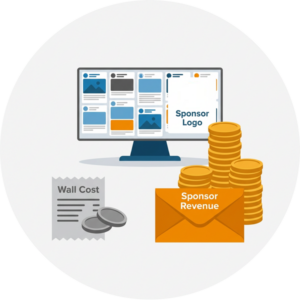
A self-service event social wall starts from $49 per event day. Even the full-service option, where a team designs and runs everything for you, starts from a $299 daily rate plus a setup fee. You can see the current numbers on our event social wall pricing page. Compare that to the sponsorship rates above. If a sponsor pays you $5,000 for the wall and it costs a few hundred dollars to deliver, most of that check is margin.
That is the part associations miss when they treat the wall as a nice extra instead of inventory. The delivery cost is a small fraction of what the sponsorship sells for. You are not buying an expensive asset and hoping to recover the cost. You are buying a modest tool and selling the exposure it creates for many times more.
An Everwall event social wall also does more than show logos, which helps you justify the price. It pulls from 16 different content sources, including X, Instagram, LinkedIn, Bluesky, Facebook, SMS, and a direct web form for attendees who do not want to post publicly. It updates in real time, so the screen is never stale and people always have a reason to look at it. And it includes a website embed at no extra cost, so the sponsor’s logo can appear in your event app or on your event page, not just in the room. That embed is worth mentioning in your prospectus, because it stretches the sponsor’s exposure past the event dates.
If you want to show sponsors what they got after the event, the recap feature keeps attendee posts and sponsor moments in one place. Our article on the event recap page explains how that works, and it makes renewal conversations much easier when you can hand a sponsor a report.
Putting Your Number on the Prospectus
Once you have your factors and your packages, writing the actual line in your prospectus is straightforward. Start with a comparable event, adjust for your attendance and number of days, decide on exclusivity, and match the deliverables to the price. Then check that number against the published range so you know you are not far off in either direction.
 Do not price the wall like a favor to a sponsor. Price it like the inventory it is, with comparable rates from real prospectuses backing you up. When a sponsor asks why the wall costs what it costs, you can point to attendance figures, screen placement, exclusivity, and the deliverables list. That is a much stronger position than “this is what we charged last year because it felt about right.”
The associations selling out their social sponsorships are the ones who treat the wall as a named product with a defensible price. You can join them this pricing season by using the benchmarks, matching deliverables to each tier, and remembering that the cost to run the wall is small compared to what it earns you. Set the rate with comparables, and the number will hold up when a sponsor pushes back.
Ready to build a social wall your sponsors will actually pay for? Everwall’s Event Social Wall gives you real-time posts from 16 content sources, custom sponsor branding, and a free website embed so logos travel beyond the room. Take a look and see how it fits your next event prospectus.
Pretty good, right? Share this with your people.


