


Trade Show Engagement Ideas to Boost Booth Traffic
Published on June 29, 2026
Trade shows are strange environments. Thousands of people walk past your booth every hour, but most of them barely glance your way. They’re juggling conversations, scanning for specific vendors, checking their phones, and trying to remember where they parked. Their attention is fragmented by design.
This creates a problem that many exhibitors misunderstand. They focus on getting more foot traffic when the real challenge is converting passing glances into interactions. A busy expo floor can feel productive, but if attendees aren’t stopping, talking, or participating, those numbers don’t translate into leads or sales.
The difference between a successful trade show presence and a forgettable one often comes down to a single factor: participation triggers. These are the specific elements in your booth design, messaging, and activities that give people a reason to stop walking and to come talk to you. Without a trigger, you’re just part of the chaos of the trade show floor.
What Makes Expo Engagement Challenging
Trade shows compress hundreds of competing messages into a small space. Attendees experience sensory overload within minutes of walking through the doors. Their brains start filtering aggressively, ignoring anything that doesn’t immediately stand out as relevant or interesting.
Several factors make trade show engagement particularly difficult:
- Time pressure: Attendees have limited hours to cover the entire floor. They mentally calculate whether stopping at your booth is worth the minutes it will cost them.
- Decision fatigue: By the third hour, most attendees have already talked to dozens of vendors. Their willingness to engage drops with each conversation.
- Passive habits: People default to walking and looking rather than stopping and doing. Breaking this pattern requires deliberate design.
- Competitive noise: The booth next to you might have louder music, brighter lights, or flashier giveaways. Standing out through volume alone rarely works.
Understanding these challenges helps explain why traditional approaches often fail. Handing out brochures, waiting for people to approach, or relying solely on signage puts the burden of action on the attendee. Effective trade show engagement ideas flip this dynamic by making participation the obvious next step.
12 Trade Show Engagement Ideas That Actually Work
The following tactics have been tested on expo floors across industries. They share one common trait: they make it easy for attendees to do something rather than just observe.
1. Live Polling Stations
Set up a tablet or touchscreen where attendees can vote on a relevant industry question. Display the results in real time on a monitor. People love seeing how their opinions compare to others, and the visual movement of changing results draws attention from passersby.
2. Photo Opportunity Corners
Create a designated spot with good lighting, your branding, and a simple prop or backdrop. Add a clear prompt telling people exactly what to do: “Snap a photo and tag us @yourhandle.” The easier you make it, the more participation you’ll get.
3. Question of the Hour
 Post a new question every 60 minutes on a whiteboard or digital screen. Ask attendees to write their answers on sticky notes or submit them digitally. This creates repeat visits as people check back to see new questions and how others responded.
4. Prize Wheel or Raffle Entry
Physical prize wheels work because they involve action. Attendees spin, watch, and experience a small moment of suspense. For raffles, use a digital entry system that captures contact information while keeping the line moving quickly.
5. Interactive Product Demos
Instead of demonstrating to people, let them try your product themselves. Provide clear instructions and a staff member nearby to answer questions. Hands-on experience creates stronger memories than passive observation.
6. Booth Shout-Outs
Periodically announce something from your booth. This could be a giveaway winner, a special offer for the next 15 minutes, or recognition of someone who just signed up. Audio cues draw attention and create urgency.
7. Social Media Challenges
Create a simple, specific challenge tied to your booth. “Show us your best [industry-related pose]” or “Share your answer to [relevant question] using #YourHashtag.” The challenge gives attendees a concrete action to take.
8. Knowledge Quizzes
Short quizzes about industry topics or your product let attendees test themselves. Display leaderboards showing top scores. This appeals to competitive personalities and provides a natural conversation starter.
9. Live Expert Sessions
Schedule brief 10-minute talks or Q&A sessions throughout the day. Announce the next session time prominently. People will return to your booth at scheduled times, increasing overall engagement.
10. Charging Station with a Twist
Everyone’s phone dies at trade shows. Offer charging but add an engagement element. While they wait, invite them to fill out a quick survey, watch a short video, or participate in a conversation.
11. Collaborative Art or Message Boards
Invite attendees to contribute to something visual. This could be adding their company logo to a wall, writing their biggest industry challenge on a shared board, or placing a pin on a map showing where they traveled from.
12. Instant Content Creation
Help attendees create something they can take with them digitally. This might be a personalized recommendation based on a quick assessment, a custom graphic with their name, or a short video clip. Content creation gives them a reason to share and remember you.
How to Design a Participation Loop Across Your Booth
Individual engagement tactics work better when they connect into a participation loop. This means designing your booth so that one activity naturally leads to another, keeping attendees engaged longer and creating multiple touchpoints.
A participation loop typically includes three stages:
- Entry point: Something that stops people in their tracks. This could be visual (an interesting display), auditory (music or announcements), or physical (someone handing them something).
- Core activity: The main engagement where attendees spend the most time. This is where your best trade show engagement ideas come into play, whether it’s a demo, a challenge, or a conversation.
- Exit with action: Before they leave, give them one more thing to do. Enter a raffle, share a photo, schedule a follow-up call. This final step converts the interaction into measurable outcomes.
Map out your booth space with these stages in mind. Position your most eye-catching element near the aisle edge. Place your core activity deeper in the booth so people have to enter fully. Set up your exit action near the back or at a natural ending point.
Staff placement matters too. Have team members positioned at each stage of the loop. The person at the entry point has a different job than the person running your core activity. Train them accordingly.
Using Screens Strategically Without Becoming Noise
Digital screens at trade shows can attract attention or contribute to visual clutter. The difference depends entirely on what you display and how you display it.
Avoid these common screen mistakes:
 Playing looped corporate videos that attendees have no reason to watch
- Showing static slides that could just as easily be printed posters
- Running content with small text that can’t be read from a distance
- Displaying information that requires explanation to understand
Screens work best when they show something that changes, something created by attendees, or something that invites participation.
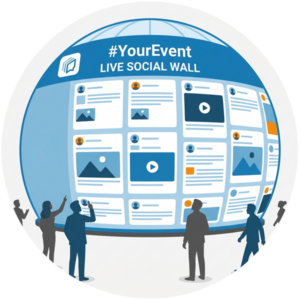
Real-time content performs particularly well. When attendees see that what’s on screen is happening right now, they pay closer attention. This could be live social media posts from the event, current poll results, or a feed of recent raffle entries.
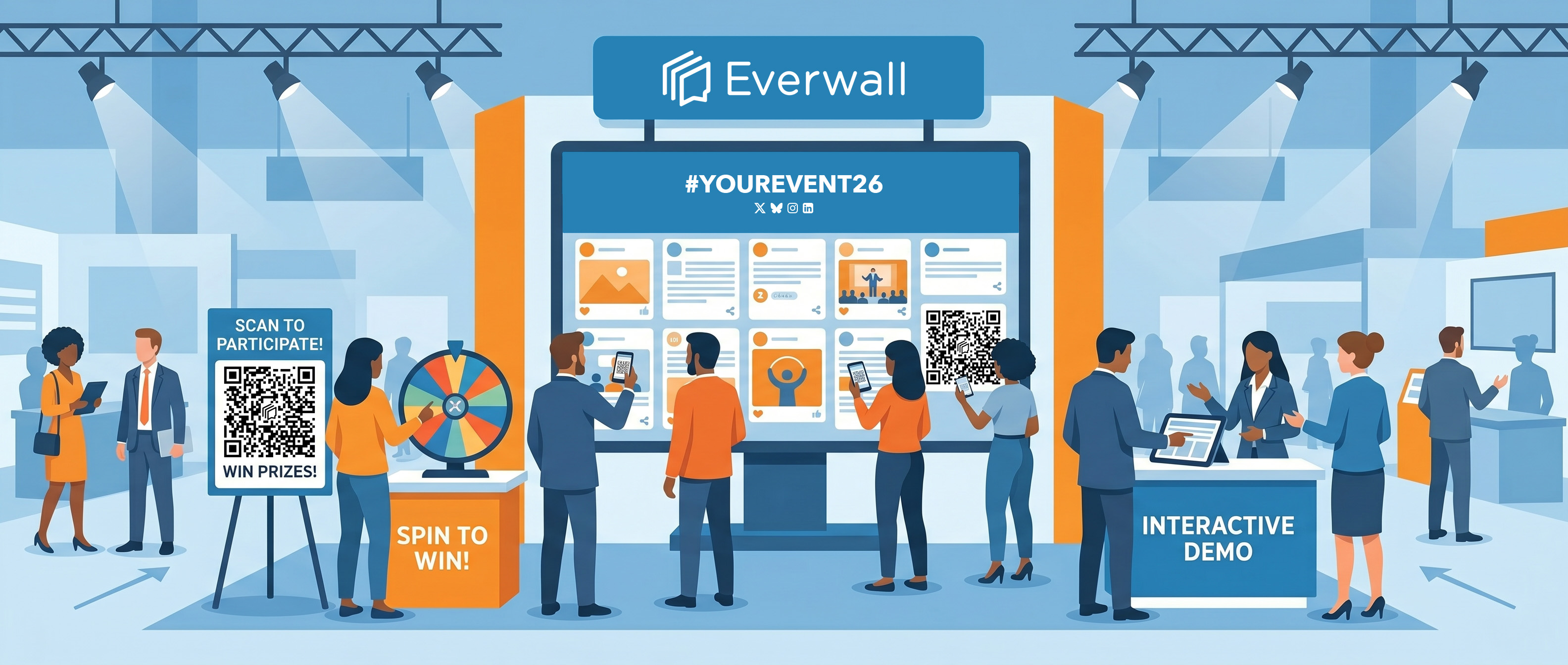
A social wall can serve this purpose effectively. Everwall’s event social wall aggregates posts from attendees using your event hashtag, direct submissions via QR codes, and content from multiple social platforms into a single display. This creates a living, breathing screen that changes constantly and shows real participation from real people.
The visual proof that others are engaging encourages more engagement. When attendees see photos and posts from fellow visitors, they realize participation is expected and easy. The social wall becomes both a display and an invitation.
For placement, position screens where people naturally pause or wait. Near seating areas, beside demo stations, or above charging locations. Avoid placing screens where they compete with your staff for attention during conversations.
Creating a Shared Experience Across the Expo Floor
Some of the most effective trade show engagement ideas extend beyond individual booths. When exhibitors, planners, and organizers coordinate their efforts, the entire floor becomes more engaging for everyone.
Event planners can create floor-wide participation prompts. A shared hashtag displayed throughout the venue. A challenge that spans multiple booths. A scavenger hunt that rewards attendees for visiting different exhibitors. These collective experiences benefit everyone.
As an exhibitor, you can tap into floor-wide momentum. Promote the event hashtag alongside your own. Encourage attendees to share their experience at your booth as part of the larger event story. When your booth content appears alongside posts from other vendors and attendees, you become part of a bigger conversation.
Social walls excel at this type of aggregation. A single display can pull in posts from your booth’s hashtag, the event’s main hashtag, and direct submissions from attendees who don’t use social media. The result is a real-time snapshot of the entire event experience, anchored at your location.
This approach also provides value to event organizers, who benefit when exhibitors actively encourage attendee participation. Some planners offer premium booth placement or sponsorship credits to exhibitors who drive the most social engagement. If you’re coordinating event engagement planning, consider how your booth strategy aligns with larger event goals.
Measuring What Actually Matters
Counting visitors who walked past your booth tells you very little. Effective measurement focuses on participation rather than proximity.
Track these metrics instead:
- Number of attendees who completed an activity
- Social media posts or photos created at your booth
- Raffle or email list sign-ups
- Demo sessions conducted
- Scheduled follow-up meetings
- Survey or quiz completions
Each of these represents a real action that indicates genuine interest. Someone who spins your prize wheel and enters their email has demonstrated more intent than someone who picked up a brochure while walking by.
Digital tools make this tracking easier. Use tablets for sign-ups, QR codes for entries, and analytics from your social wall to measure hashtag usage. After the event, you can compare participation rates across different activities to learn what worked best.
For a deeper look at connecting engagement to business outcomes, treating engagement as a revenue metric can help you build the case for future trade show investments.
Preparing Your Team for Active Engagement
Your booth staff can make or break your engagement strategy. Even the best trade show booth ideas fall flat when team members don’t execute them properly.
 Before the event, brief your team on every activity you’ve planned. Run through the participation loop so everyone understands how attendees should move through the space. Assign specific roles so no one stands around waiting for something to happen.
Teach your team to invite participation rather than waiting for it. “Would you like to try our quiz?” works better than standing silently behind a demo station. Brief greetings that include a call to action convert more foot traffic into actual engagement.
Energy matters throughout the day. Schedule breaks so staff members stay fresh. Rotate positions to prevent fatigue. The difference between a tired team and an energetic one is visible from across the expo floor.
Keeping Momentum After the Show
Trade show engagement doesn’t end when the floor closes. The connections made during the event can extend into lasting relationships if you follow up effectively.
Within 48 hours, reach out to everyone who participated in your booth activities. Reference the specific thing they did. “Thanks for sharing your photo at our booth” is more memorable than a generic follow-up.
Share the content created during the event. Post photos, poll results, and highlights on your social channels. Tag attendees when possible. This extends the visibility of your trade show presence beyond those who physically attended.
For more ideas on maintaining engagement after events conclude, explore strategies for post-event engagement.
If you’re looking for a way to make participation visible at your next trade show, Everwall’s event social wall can display attendee posts, photos, and messages in real time. It works with hashtags, direct submissions, and 15 different content sources. Create a shared experience that encourages more people to participate.
Pretty good, right? Share this with your people.


