


Event Engagement Plan Template: A Simple Strategy for Participation
Published on May 25, 2026
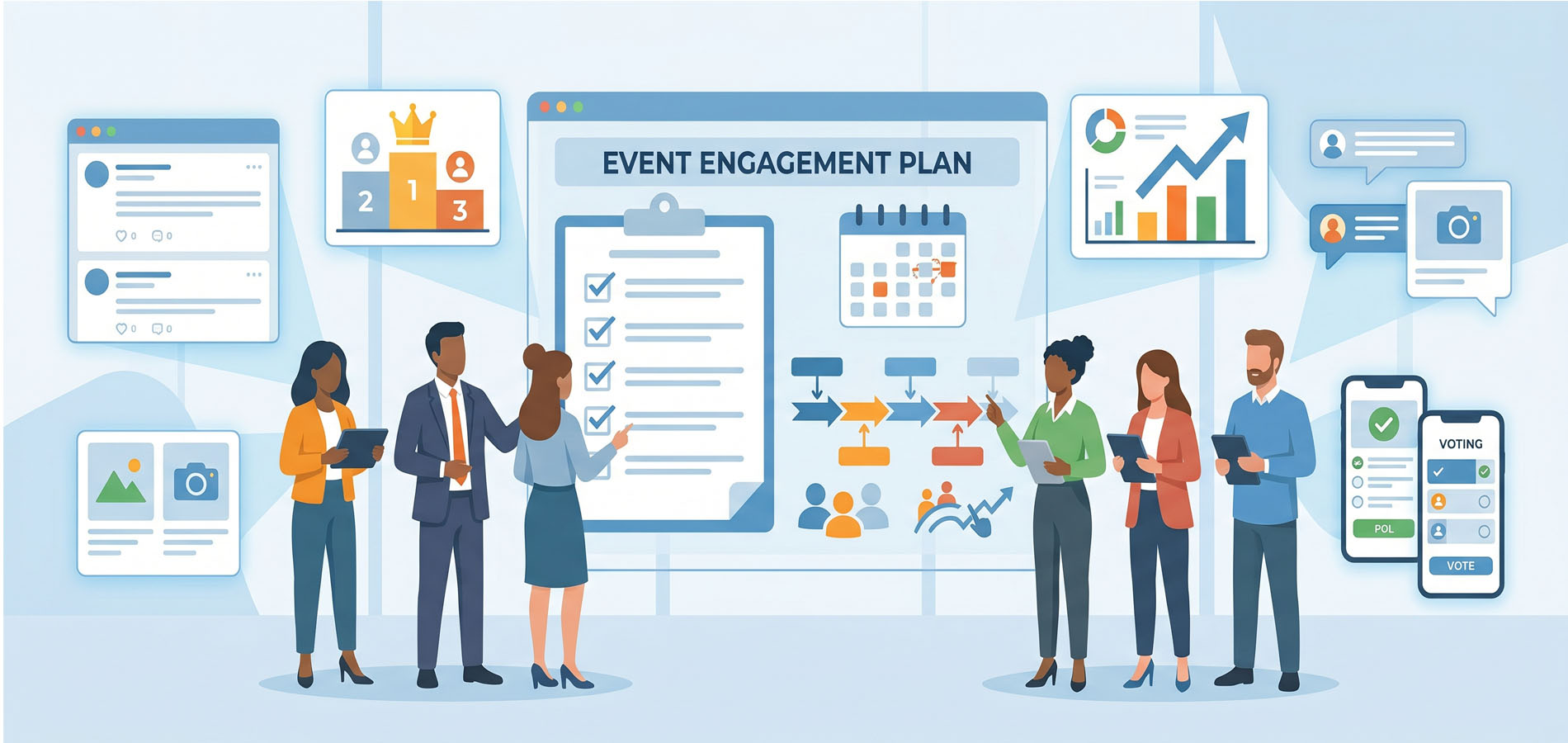
So you’ve spent months planning an event. The venue looks great, the speakers are ready, and the agenda is locked in. But when attendees arrive, they sit quietly, check their phones, and leave without posting a single photo or sharing a thought. What went wrong?
The answer is usually simple. Most events don’t have an engagement problem. They have a planning problem.
Engagement gets treated like an afterthought. Prompts are created the night before. Instructions for participating are unclear or buried in an email no one read. Attendees want to join in, but they don’t know when, how, or why they should.
This is why having an event engagement plan matters. When you design participation into your event the same way you plan logistics, you get better results. Attendees feel invited to contribute. Content gets created. Energy builds in the room. And you walk away with more than just attendance numbers.
This article gives you a copy-and-paste event engagement plan template you can use for your next event. It’s practical, simple, and built to help you look organized while delivering a better experience for everyone.
Want a ready-made version? Download our free Event Engagement Plan Template and fill in the blanks.
What Is an Event Engagement Plan?
An event engagement plan is a roadmap that tells attendees when to participate, how to do it, and why it matters.
Think of it like your run of show, but for audience participation. Just as you schedule speakers and breaks, your engagement plan schedules the moments when you want attendees to take action.
A good plan answers three questions:
- When should attendees participate?
- What should they do or share?
- Why does their participation matter?
Without clear answers to these questions, you’re hoping people will engage on their own. Hope isn’t a strategy. A plan is.
The One-Page Event Engagement Plan Template
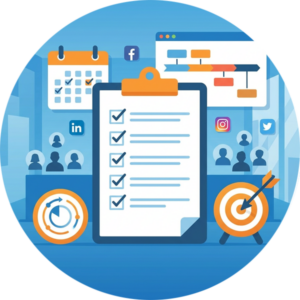 Use the following sections to build your own event engagement plan. You can copy these headings directly into your planning documents and fill in the details for your specific event.
Event Goal
Start by defining what success looks like for your event overall. This isn’t about engagement yet. It’s about the bigger picture.
Examples:
- Launch a new product and generate media coverage
- Connect 500 industry professionals for networking
- Celebrate graduating students and their families
- Train sales teams on new processes
Your engagement activities should support this larger goal, not distract from it.
Participation Goal
Now get specific about what you want attendees to do. This should be measurable so you can evaluate whether your plan worked.
Examples:
- 20% of attendees contribute at least one post, photo, or comment
- 50 user-generated posts collected during the keynote session
- 100 questions submitted through the Q&A tool
- 75% of attendees interact with at least one poll
Pick one or two participation goals that connect back to your event goal. If you’re launching a product, maybe you want social posts that show excitement. If you’re running a training, maybe you want poll responses that show comprehension.
Audience Segments
Not all attendees are the same. Identify who you’re designing engagement for so your prompts and channels make sense.
Consider segments like:
- First-time attendees vs. returning attendees
- VIPs and speakers vs. general audience
- In-person attendees vs. virtual viewers
- Different age groups or professional levels
A prompt that works for young professionals might fall flat with executive attendees. Knowing your audience helps you craft participation moments that feel natural.
Engagement Moments
Map out the specific times during your event when you’ll prompt participation. These are the “when” of your plan.
Common engagement moments include:
Pre-event
- Registration confirmation emails
- Countdown posts on social media
- Early access content or surveys
During the event
- Check-in and arrival
- Opening session or welcome remarks
- Mid-session breaks
- Interactive segments during presentations
- Networking breaks
- Closing session or final remarks
Post-event
- Thank-you emails
- Highlight reels or recaps
- Feedback surveys
You don’t need to fill every moment with engagement activities. Pick three to five key moments where participation makes sense and focus your energy there.
Prompts
Prompts are the “what” of your plan. They tell attendees exactly what to share or do at each engagement moment.
Strong prompts are specific, easy to follow, and give people a reason to participate. Here are examples organized by type:
Photo moment prompts:
- “Snap a selfie at the welcome banner and tag us with #EventName”
- “Show us your conference badge and your best smile”
- “Capture the view from your seat right now”
Shout-out prompts:
- “Give a shout-out to someone who helped you get here today”
- “Who’s your favorite speaker so far and why?”
- “Tag a colleague who should have been here”
Opinion prompts:
- “What’s one word that describes this event?”
- “What’s your biggest takeaway from the keynote?”
- “Vote: Was this the best session or the best session ever?”
Q&A prompts:
- “What question do you have for our next speaker?”
- “Drop your toughest challenge in your role and let’s discuss”
For more ideas on what to ask attendees, check out our guide on social wall content ideas that actually get people to participate.
Participation Channels
Channels are the “how” of your plan. Where should attendees send their contributions?
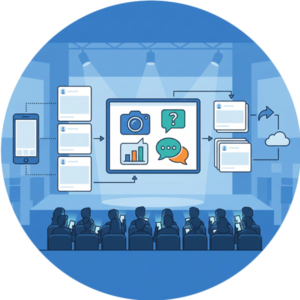 Social media options:
- Event hashtag on X, Instagram, LinkedIn, or Facebook
- Mentions of your brand accounts
- Stories and reels with location tags
Non-social options:
- Web forms where attendees can submit content directly
- SMS submissions for those who prefer texting
- In-app submission features
- QR codes that link to submission pages
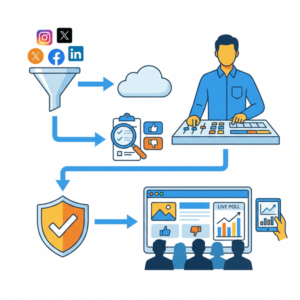
Not everyone uses social media, and some attendees prefer not to post publicly. Offering multiple channels increases the number of people who can participate. This is especially important for corporate events or educational institutions where attendees may have restrictions on their social media use.
Moderation and Safety Plan
Before you display any user-generated content, decide how you’ll handle moderation.
Key questions to answer:
- Will posts appear automatically or after approval?
- Who is responsible for monitoring submissions?
- What content will be blocked or removed?
- Do you have backup content if submissions are slow?
For most events, pre-moderation is the safest choice. This means every post gets reviewed before it appears on screen. You can learn more about this in our guide to effective moderation for social media walls.
Post-Event Reuse Plan
Your engagement plan shouldn’t end when the event does. The content attendees create has value beyond the live experience.
Plan how you’ll reuse contributions:
- Recap videos or highlight posts on social media
- Content embedded on your website as social proof
- Internal reports showing participation metrics
- Follow-up emails featuring attendee posts
- Content for promoting next year’s event
Having a reuse plan also gives attendees another reason to participate. When they know their content might be featured on your website or in a recap video, they’re more likely to contribute.
How to Execute This Plan Without Adding More Work
Creating an engagement plan is one thing. Running it smoothly during a live event is another.
This is where engagement platforms help. Instead of manually collecting posts from multiple social networks, copying them into slides, and hoping everything syncs up, a platform handles the technical work so your team can focus on the event itself.
Everwall’s event social walls let you display live social media content from 15 different sources, including X, Instagram, LinkedIn, and Facebook. Posts appear in real time on screens throughout your venue, creating visible proof that people are participating.
For attendees who don’t use social media or prefer not to post publicly, Everwall offers SMS as well as Everwall Direct. Everwall Direct lets people submit content through a simple web form. This keeps participation open to everyone, not just the most active social users.
The content you collect during the event can also be embedded on your website through a social media hub or you can share your Everwall Wrapped site with your attendees. This means your engagement continues working after the event ends.
If you’re running multiple events or working as an agency, tools that scale across clients can save significant time. Our article on event engagement tools for agencies covers what to look for.
Quick-Start Version for Busy Planners
If you don’t have time for a full engagement plan, here’s the minimum viable version. Do these three things and you’ll be ahead of most events.
Pick three engagement moments:
 Arrival or check-in
- One mid-event moment during a key session
- Closing session
Create five simple prompts:
- Photo prompt: “Show us where you’re sitting with #EventName”
- Shout-out prompt: “Tag someone who made today possible”
- Opinion prompt: “What’s your one-word reaction to that session?”
- Q&A prompt: “What’s your biggest question right now?”
- Closing prompt: “Share your top takeaway before you leave”
Set one moderation rule:
All posts require approval before appearing on screen. Assign one person to monitor and approve content, and make sure they’re manning the moderation console at the specific times you plan on promoting for engagement so they can moderate the content and get it onto screens quickly.
That’s it. Three moments, five prompts, one rule. If you do nothing else, do this.
Download the free Event Engagement Plan Template to get all of this in one editable document you can share with your team.
Making Engagement Repeatable
The real value of an event engagement plan isn’t just one successful event. It’s building a system you can use again.
After each event, review what worked. Which prompts got the most responses? Which moments felt natural for participation? What channels did attendees actually use?
Use those insights to refine your template for the next event. Over time, you’ll build a library of proven prompts and engagement moments that work for your audience.
For a more detailed breakdown of engagement activities across all phases of your event, our event engagement checklist walks through what to do before, during, and after.
A Simple Plan Beats Random Engagement Every Time
Engagement doesn’t happen by accident. It happens when you make it easy for people to participate, tell them exactly what to do, and give them a good reason to do it.
An event engagement plan puts those pieces in place before the event starts. It turns engagement from something you hope for into something you design.
Use the template in this article as your starting point. Adjust it for your audience and your goals. And remember: participation becomes repeatable when you treat it like any other part of event logistics. Plan it, execute it, measure it, and improve it for next time.
Ready to turn your event engagement plan into action? Everwall makes it simple to display live attendee content, collect submissions from social and non-social sources, and keep participation visible throughout your event. Explore our event social walls and see how easy it is to run an engagement plan that actually works.
Pretty good, right? Share this with your people.


