


Event Social Wall Platform: What Everwall Does and Who It’s For
Published on June 22, 2026
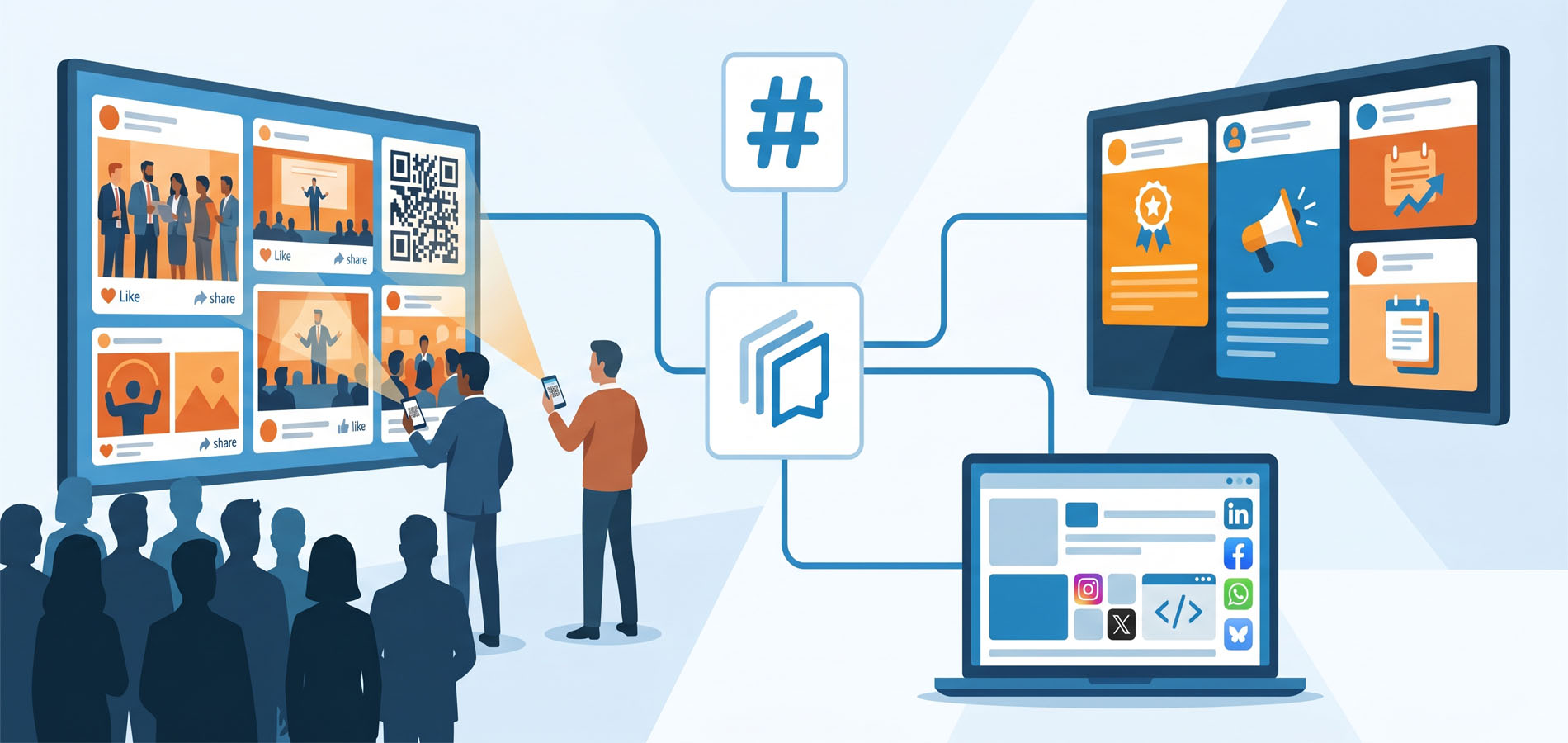
An event social wall platform is software that collects and displays social media posts in real time during live events. It pulls content from multiple social networks, filters it through moderation tools, and shows the results on large screens for everyone to see.
Think of it as a live feed of what attendees are saying, sharing, and posting about your event. When someone tweets a photo with your event hashtag or shares an Instagram picture on their feed, that content can appear on screens throughout your venue within seconds.
The purpose is simple: make attendees feel like part of something bigger. When people see their own posts displayed alongside hundreds of others, they become active participants in the event and feel like they’re part of the greater conversation. This visibility and emotional emotional desire to join in encourages more people to share, which creates a cycle of engagement that benefits everyone involved.
Event social wall platforms differ from basic slideshow tools or static displays because they connect directly to social networks and update automatically. They also include moderation features so event organizers can approve content before it appears, keeping displays professional and on-brand.
Three Main Ways Organizations Use Social Walls
Social walls serve different purposes depending on where and how you use them. Understanding these use cases helps you decide which approach fits your needs.
Live Events
This is the most common application. Conferences, trade shows, concerts, graduations, and corporate meetings all benefit from real-time social displays. The social wall becomes a focal point where attendees can see their contributions alongside everyone else’s.
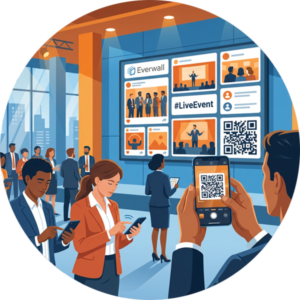 At a conference, for example, speakers can ask audiences to share questions or insights using a designated hashtag. Those posts then appear on screens near the stage, creating a two-way conversation between presenters and attendees. This approach works particularly well for large gatherings where traditional Q&A sessions become logistically difficult.
Sporting events use social walls to showcase fan reactions, game-day photos, and player highlights. Universities display graduate messages during commencement ceremonies. Music festivals create communal experiences by showing crowd photos and videos in real time.
Ongoing Digital Signage
Some organizations need social displays that run continuously rather than just during events. Corporate offices, retail stores, restaurants, and hospitality venues fall into this category.
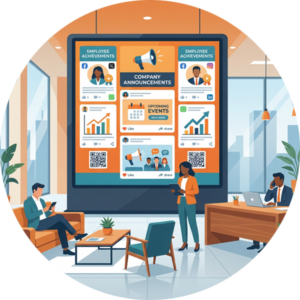
A company lobby might display employee recognition posts, team photos, and internal announcements pulled from workplace social channels. A restaurant could show customer reviews and food photos to create social proof for visitors. Hotels might highlight guest experiences and local attractions.
This use case requires different features than event-based displays. Content needs to stay fresh over weeks or months rather than hours. Scheduling, automated curation, and long-term content management become more important than real-time speed.
Website Embeds (Social Media Hubs)
The third application involves embedding social content directly onto websites. Rather than displaying on physical screens, these social media hubs live on web pages where visitors can browse the user-generated content.
E-commerce sites embed customer photos and reviews to build trust with shoppers. Event websites show attendee testimonials and past event highlights. Brand sites display community content to demonstrate authentic customer relationships.
Website embeds serve a different goal than live displays. They extend the life of social content beyond the moment it was created, giving that content ongoing value for marketing and engagement.
What Separates a Platform from a Simple Display Tool
Many tools can show a Twitter feed on a screen. Fewer offer the flexibility, participation options, and reusability that distinguish a true platform from a single-purpose widget.
Multiple participation methods matter because not everyone uses social media the same way. Some attendees post actively on Instagram. Others prefer LinkedIn. Many people, especially at corporate events, prefer not to post on personal social accounts at all.
A capable event social wall platform supports various content sources. Everwall, for instance, connects to 15 different sources including X (formerly Twitter), Instagram, LinkedIn, Bluesky, Facebook, web forms, and SMS. This variety means attendees can participate through whichever method feels comfortable to them. Someone who never posts on social media can still submit a photo through a QR code and web form without creating any public post.
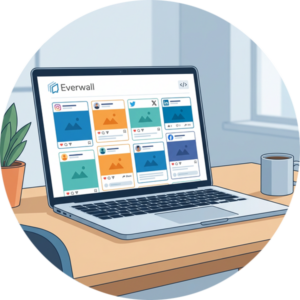
Reusability across contexts separates platforms from one-time tools. Content collected during a live event doesn’t have to disappear when the event ends. That same content can appear on your website afterward, extending its value. Everwall includes website embedding at no additional cost with event social walls, so organizations can repurpose event content immediately.
Moderation controls protect your brand and keep displays appropriate. Automated keyword filters catch obvious problems, but human review ensures nothing unwanted reaches your screens. Different events require different moderation approaches. A music festival might approve almost everything while a medical conference requires stricter oversight.
Layout and design flexibility lets you match the display to your event’s visual identity. Cookie-cutter designs work for some situations, but branded events often need custom looks. Options range from self-service templates to fully custom designs for organizations with specific requirements.
When to Use Each Type of Social Wall
Choosing between event-based walls, ongoing signage, and website hubs depends on your goals, timeline, and how you want content to function.
Choose an Event Social Wall When:
- You have a specific event with defined start and end times
- Real-time content display matters for engagement
- You want to capture attendee-generated content during the event
- The display needs to feel dynamic and responsive to what’s happening now
Event walls work best for conferences, trade shows, award ceremonies, product launches, weddings, and similar gatherings. The billing is typically per-event-day rather than monthly, which makes sense when you only need the display for a short period.
Choose Ongoing Digital Signage When:
 You need content running for weeks or months
- The display is part of a permanent installation
- Content should rotate and refresh automatically over time
- Multiple screens across different locations need coordination
Corporate offices, retail environments, hospitality venues, and educational campuses often need this approach. Monthly billing fits better than per-day charges when displays run continuously.
Choose a Website Embed When:
- You want social content on your website rather than physical screens
- Marketing teams need to showcase user-generated content
- The goal is building trust with website visitors through social proof
- Content should persist and remain accessible long after it was posted
Website hubs work for e-commerce sites, brand pages, event marketing sites, and anywhere you want visitors to see authentic community content.
Combining Approaches
Many organizations use multiple types together. A conference might run event social walls during the three-day gathering, then embed that collected content on their website afterward as testimonials for next year’s registration page. A retail brand might use ongoing digital signage in stores while also maintaining a website hub that pulls from the same content sources.
Everwall’s event social wall includes the website embed functionality automatically, which simplifies this kind of combined approach. You don’t need separate tools or additional costs to repurpose event content for your website.
Making Content Worth Displaying
The technology only works if people actually participate. Empty social walls with just a few scattered posts feel awkward rather than engaging.
Getting participation requires planning. Clear calls to action tell attendees exactly what to do. “Share your experience using #EventName” works better than hoping people figure it out on their own. Speakers and hosts should mention the hashtag multiple times throughout the event. Placing QR codes at check-in, near food stations, and in session rooms gives people easy ways to participate.
Timing matters too. Prompts tied to specific agenda moments tend to generate more responses than general requests. Asking attendees to share their biggest takeaway right after a keynote captures reactions while the content is fresh. Building participation prompts into your event agenda creates natural moments for engagement rather than relying on spontaneous posting.
Content quality improves when you give people direction. Generic hashtag requests often produce generic responses. Specific prompts like “Share a photo of your team at the booth” or “What’s one thing you learned in this session?” guide people toward more interesting contributions.
Questions to Ask When Choosing Your Starting Point
If you’re evaluating an event social wall platform for the first time, these questions help clarify what you actually need.
How long will you use it? A two-day conference has very different requirements than a year-round retail installation. This question determines whether event-based or subscription-based pricing makes more sense for your situation.
Where will content appear? Physical screens at a venue, embedded on your website, in your event app, or all three? Knowing this upfront prevents surprises later about what’s included versus what costs extra.
Who is your audience? Younger crowds might post readily on Instagram. Professional conference attendees might prefer LinkedIn or anonymous web submissions. Make sure the platform supports the sources your audience actually uses.
What moderation level do you need? Some events can approve almost everything with light filtering. Others require careful review of every post. Check whether the platform offers the moderation tools your situation requires.
Do you need custom design? Template-based layouts work for many events. Branded experiences with specific visual requirements may need custom design options. Understand what’s available at each service level.
What happens to content afterward? If you want to reuse event content on your website or in marketing materials, confirm that the platform supports content export or embedding beyond the live event.
How much support do you want? Self-service platforms cost less but require you to handle setup and management. Full-service options cost more but include dedicated support teams who manage everything for you. Your budget and available time both factor into this decision.
Everwall offers tiered service levels ranging from self-service options starting at accessible price points to full-service and VIP packages for organizations that want hands-off management.
Beyond the Single Event
 The most valuable event engagement tools are the ones you can use again. Content collected at one event becomes marketing material for the next. Participation data shows which sessions generated the most engagement. Photos and testimonials serve as authentic proof that your events deliver value.
An event social wall platform should function as engagement infrastructure rather than a disposable one-time tool. The investment in learning the platform, establishing your hashtags, and building participation habits pays off more when you can apply it repeatedly across multiple events and contexts.
Organizations that treat social walls this way often see improving results over time. Attendees who participated at previous events know how it works and participate more readily. Content libraries grow richer with each event. Marketing teams have more material to work with for promotion and sales support.
If you’re planning events and want attendees to participate rather than just attend, an event social wall platform gives you the tools to make that happen. Everwall supports 15 content sources, offers 12 display layouts, includes website embedding at no extra cost, and provides moderation features that keep your displays professional. See how Everwall’s event social wall works and find the service level that fits your needs.
Pretty good, right? Share this with your people.


