


AI Personalization in Event Marketing
Published on July 6, 2026
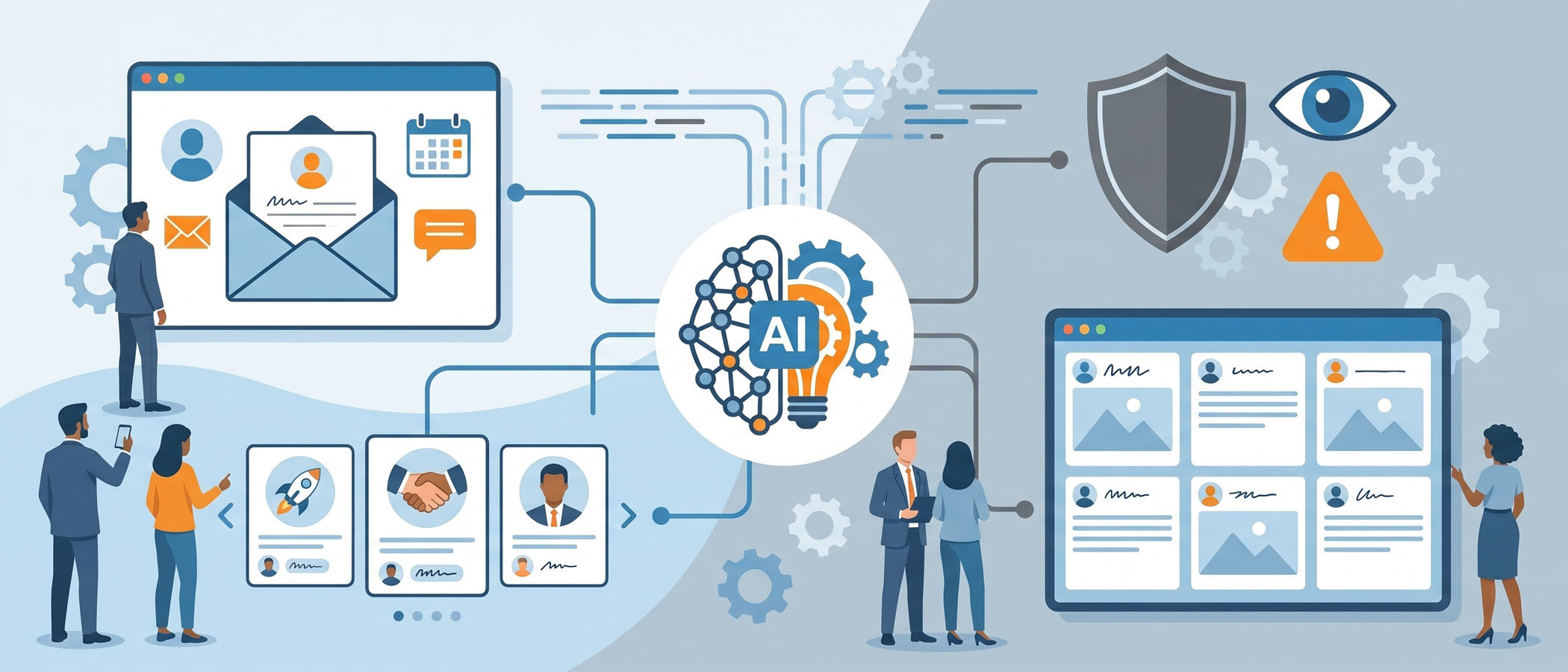
Imagine signing up for a conference. Before you even arrive, an email greets you by name, suggests three sessions based on your job title, and reminds you about a networking lunch you might like. That feels helpful. Now imagine that same email mentions the coffee shop you visited that morning, references a private message you sent a colleague, and predicts who you’ll want to avoid at the after-party. Suddenly it feels like someone has been watching you.
That gap between helpful and unsettling is the whole challenge with AI personalization in event marketing. The tools have gotten very good at predicting what people want. The hard part is knowing when to use that power and when to hold back. This article walks through how event planners can use AI to make experiences better while keeping the trust of the people who show up.
Why AI Personalization in Event Marketing Is Everywhere Now
A few years ago, personalizing an event meant printing name badges and maybe sorting attendees into a couple of broad groups. Today, software can look at registration data, past attendance, and survey answers, then suggest a custom agenda for every single person in seconds.
Two things are driving this shift: speed and scale. AI can sort through thousands of attendee profiles faster than any team of humans. It can send the right message to the right person at the right moment without anyone manually building each one. For planners juggling tight budgets and small teams, that kind of help is hard to pass up.
Attendees have also come to expect it. People are used to streaming services recommending shows and online stores remembering their sizes. When an event treats everyone exactly the same, it can feel outdated. So planners are leaning into personalization as part of the broader event marketing trends shaping 2026. The technology is ready and the audience is open to it. The question is how to do it well.
Where AI Personalization Goes Wrong
 The line between thoughtful and creepy is thinner than most people think. Personalization breaks down when it makes someone feel watched instead of welcomed. Here are the most common ways that happens:
- Using data people didn’t know you had: If an attendee never told you something directly, referencing it makes them wonder what else you know.
- Being too specific too fast: Knowing someone’s name is fine. Knowing their exact browsing history and bringing it up feels invasive.
- Targeting that feels like pressure: Repeated messages that seem to follow someone around, pushing them toward a purchase, come across as pushy rather than helpful.
- Predictions that feel personal: Guessing someone’s mood, health, or relationships based on behavior crosses a line most people never agreed to.
The problem is rarely the technology itself. It’s the lack of consent and the absence of restraint. When people feel surprised by how much an event seems to know, the reaction is discomfort, not delight. And once that trust is gone, it’s very hard to win back.
The Principles of Safe Personalization
Good personalization rests on a few simple ideas. If you keep these in mind, you can use AI in events without making anyone uneasy.
Consent comes first
People should know what data you’re collecting and agree to it. This doesn’t have to be a wall of legal text. A short, clear note during registration that explains how you’ll use someone’s information goes a long way. When people opt in, personalization feels like a service they asked for rather than something done to them.
Be transparent about what you’re doing
If an attendee gets a session recommendation, it helps to say why. A line like “Based on the topics you selected at sign-up” tells people the suggestion came from something they shared. Transparency removes the mystery, and mystery is what makes personalization feel creepy.
Keep it relevant, not exhaustive
Just because you can use a piece of data doesn’t mean you should. The goal is to be useful, not to show off how much you know. A recommendation that matches someone’s stated interests is welcome. A message that catalogs every move they’ve made is not.
Practice restraint
This is the principle most planners skip. Sometimes the best choice is to not personalize at all. If using a piece of information might make someone uncomfortable, leave it out. Restraint signals respect, and respect builds the kind of trust that keeps people coming back.
Personalization Attendees Actually Appreciate
So what does helpful personalization look like in practice? Plenty of uses feel genuinely good when they’re built on consent and relevance. Here are a few that work well:
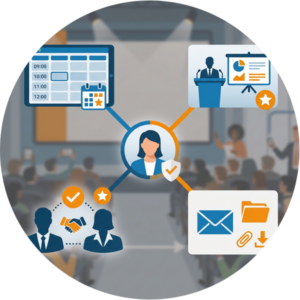 Agenda suggestions: When someone registers and picks a few topics they care about, AI can build a suggested schedule that fits those interests. The attendee saves time, and the suggestion is based entirely on what they told you.
- Session recommendations during the event: If a person attends two talks about a similar subject, recommending a third related session is a natural next step. It feels like a helpful nudge, not surveillance, because it’s tied to clear actions they chose to take.
- Smarter follow-ups: After the event, AI can help you send follow-ups that match what each person actually did. Someone who attended a workshop might get the slides and a related resource. Someone who skipped it won’t get materials that don’t apply to them. For more on this stage, our guide to post-event engagement ideas covers ways to keep that momentum going.
- Networking matches: With consent, AI can suggest a few people worth meeting based on shared interests or goals. The key word is suggest. Attendees stay in control of who they actually connect with.
In every one of these examples, the personalization is built on information people knowingly shared, and it serves them rather than steering them.
Capturing Real Participation Signals Without Tracking People
Here’s a question worth sitting with: do you need invasive data to personalize well? Often the answer is no. The most useful signals are the ones people offer openly through what they do and say at your event.
This is where an event social wall fits naturally. A social wall displays posts, photos, and messages that attendees choose to share, all in real time on a screen at your event. When someone posts a comment about a keynote or shares a photo from a session, that’s a participation signal you can see and respond to. Nobody is being secretly tracked. People are raising their hands and saying “I’m here and I care about this.”
Everwall’s social wall pulls content from 15 different sources, including X, Instagram, LinkedIn, Bluesky, Facebook, SMS, and a simple web form for people who’d rather not use social media at all. That mix means attendees can participate in whatever way feels comfortable to them. You can spot what’s resonating, surface popular posts on the big screen, and create moments that feel personal because they’re powered by what people freely chose to share.
That’s a very different model from quiet data collection. Instead of guessing at someone’s interests from hidden behavior, you’re responding to what they put out in the open. It’s personalization built on visible participation, which means it never crosses into territory that feels like spying. If you want a deeper look at how this drives interaction, our article on social wall content ideas has practical prompts to get people posting.
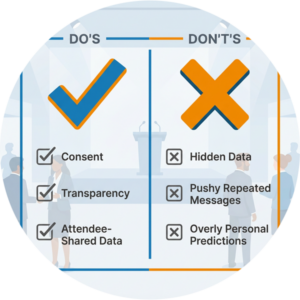
A Simple Checklist: AI Personalization Do’s and Don’ts
Keep this list handy when you’re planning how to use AI in events. It separates the choices that build trust from the ones that erode it.
Do
- Ask for consent clearly during registration and explain how data will be used.
 Tell people why they’re getting a recommendation or message.
- Base personalization on information attendees knowingly shared.
- Make it easy for people to update their preferences or opt out.
- Use participation signals, like social posts and session check-ins, that people offer openly.
- Choose restraint when a piece of data might feel too personal.
Don’t
- Reference data the attendee never gave you directly.
- Send messages that follow people around and feel like pressure.
- Predict private things like mood, health, or relationships.
- Personalize just because the technology lets you.
- Hide how you collect or use information.
- Treat AI as a replacement for genuine human connection.
The pattern across both lists is the same. When personalization is open and consent-based, it feels like care. When it’s hidden and excessive, it feels like a violation.
Trust Is the Real Advantage
It’s tempting to think the events with the most advanced AI will win. But attendees don’t grade you on how clever your software is. They grade you on how they felt while they were there. Did the event respect them? Did it make things easier without making them uneasy?
The planners who get this right treat AI as a helper, not the main act. They use it to handle the heavy lifting of sorting data and timing messages, while keeping real human judgment in charge of what feels right. Personalization works best when it supports connection between people rather than replacing it.
As you plan ahead, remember that the goal isn’t to know everything about your attendees. It’s to use what they share in ways that serve them and earn their confidence. Trust is the one thing competitors can’t copy, and in a world full of automation, it’s becoming the most valuable thing an event can offer.
Ready to personalize your next event around real participation instead of hidden tracking? An Everwall event social wall puts attendee posts, photos, and messages front and center, giving you genuine engagement signals you can respond to in the moment. Set one up for your next event and let your audience show you what matters to them.
Pretty good, right? Share this with your people.


