


The Event Technology Worth Budgeting For in 2027
Published on October 19, 2026
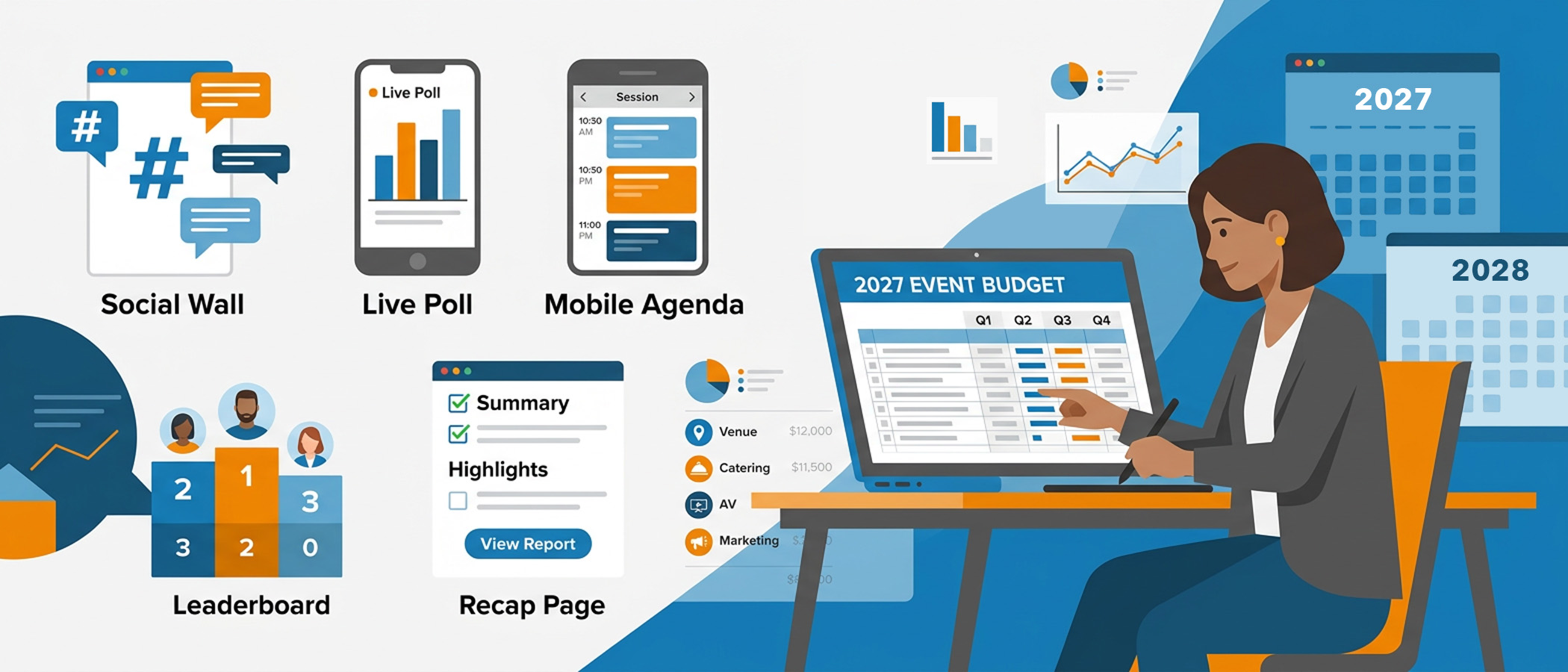
Every fall, event teams sit down to plan the next year’s spending. The venue gets a line. Catering gets a line. Audio and video get a line, no questions asked. Then someone brings up engagement, the polls, the social wall, the mobile agenda, and suddenly it’s treated like an extra you add only if there’s money left over.
That order is backwards. The parts attendees actually touch during your event are the parts that decide whether they stay in their seats or scroll through email. If you’re building an event technology budget for 2027, this is the piece that deserves a permanent spot, not a maybe. Below, you’ll find where event money really goes, why engagement earns a standing line, how to stop paying five vendors for things one platform can do, and a worksheet you can copy straight into your plan.
Where Event Budgets Actually Go
Before you can defend a new line item, it helps to know how the rest of the budget breaks down. Spending shifts from one event to the next, but a few categories show up on almost every plan.
- Venue and food: Usually the biggest slice. According to industry research, venue and catering costs together often make up a large share of the total event spend.
- Audio and video (AV): Screens, sound, lighting, and the crew to run it all.
- Marketing and promotion: Getting people to register and show up.
- Speakers and content: Fees, travel, and production for your program.
- Event technology: Registration, mobile apps, engagement tools, and anything attendees interact with directly.
Event technology is a growing piece of that pie. The global event management software market was valued at roughly $16 billion dollars in 2025 and is projected to keep climbing to $39.6 billion by 2033, bor than doubling, according to Grand View Research (source). Planners are spending more on the digital side every year, which means the smart move is deciding on purpose where that money goes instead of letting it get split up across random tools.
Why Engagement Deserves a Standing Line
Here’s the part most budgets miss. AV gets funded without debate because everyone agrees a dark stage and a dead microphone ruin an event. Engagement works the same way, but it rarely gets the same respect.
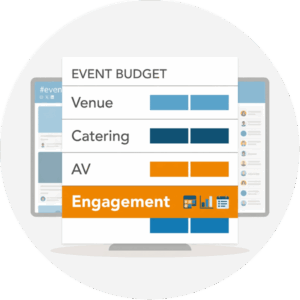 Think about what your attendee actually experiences. They don’t see your contract with the venue. They don’t see the catering invoice. What they see and do is the program, the questions they get asked, the agenda in their hand, and the content on the screens around them. That is the event, from their chair. When those pieces are missing or clunky, people check out, and checked out attendees don’t come back next year.
There’s a second reason to give engagement a permanent line: it’s the part sponsors will pay for. A social wall with a sponsor’s logo in the corner, a leaderboard they present, a recap page carrying their brand after the event ends, these are things sponsors fund willingly because they get visible exposure in return. We’ve written more about turning engagement into revenue in Why You Should Treat Engagement as a Revenue Metric, and the short version is this: engagement isn’t only a cost. Priced right, it helps pay for itself.
So treat it like AV. A standing line, sized to each event, funded every year.
Stop Paying Five Vendors for One Job
Once you commit to funding engagement, the next question is how. Many teams end up with a separate tool for each piece:
- One app for live polls
- Another for the mobile agenda
- A third for the social wall or photo wall
- A fourth for the leaderboard or gamification
- A fifth for the post-event recap page
Five tools means five contracts, five logins, five setup processes, and five bills. It also means attendees bounce between apps that don’t talk to each other, and your team spends the week before the event stitching it all together.
Consolidation fixes most of that. One engagement platform that handles the wall, the polls, the agenda, the leaderboard, and the recap page is easier to budget, easier to run, and easier to explain to finance. You negotiate one price. You learn one system. And the attendee gets one connected experience instead of a scavenger hunt.
This is where Everwall’s event social wall platform earns its place. Our social walls pull from 16 different content sources, including X, Instagram, LinkedIn, Bluesky, Facebook, SMS, and a web form called Everwall Direct for people who’d rather not post publicly. The wall updates in real time, and every plan includes the ability to embed it on your website or inside your event app at no extra cost through our Social Walls for Websites product. After the event, the same content can live on as a recap page, which keeps attendee posts and sponsor moments working long after the doors close. You can read how that works in our piece on the event recap page.
If you’re weighing one platform against several, our guide to choosing a social wall walks through the six questions worth asking before you sign anything.
When to Pay for Service, and When to Do It Yourself
Not every event needs the same level of hands-on help, and budgeting as if they do is how teams overspend. The split is simpler than it looks.
Full service for flagship events
Your biggest event of the year, the annual conference, the user conference, the sales kickoff everyone flies in for, is where full service makes sense. These events have the highest stakes, the most sponsors watching, and the least room for something to break on stage.
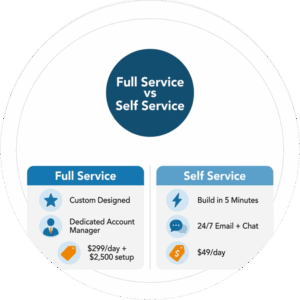 With full service, Everwall’s team handles setup, custom design, and live support, so your staff can focus on running the room. Everwall’s Full Service option includes custom-designed layouts built to match your event branding, which matters when a sponsor is paying to appear on screen. For a flagship event, that peace of mind is worth the line item.
Self service for everything else
The regional meeting, the quarterly town hall, the smaller workshop, the webinar, these don’t need a white-glove crew. Self service lets your team set up a professional-looking wall in minutes using ready-made layouts. Everwall’s self-service option includes 12 different layouts, real-time updates, and the same embedding ability as the bigger plans, just without the custom build.
The point is to size the spend to the event. One or two flagship events a year might justify full service. The rest run on self service, and your standing engagement line covers both. If you ever get caught short on time, even a last-minute event social wall can be live before doors open.
A Simple Worksheet for Your 2027 Budget
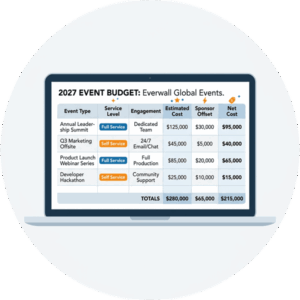
Here’s a structure you can copy straight into a spreadsheet. List every event you’re planning, then fill in the columns.
| Column | What to put there |
|---|---|
| Event name | Each event on your 2027 calendar |
| Event type | Flagship, regional, internal, webinar, etc. |
| Service level | Full service or self service |
| Event days | Number of days the wall or tools run |
| Engagement pieces | Social wall, polls, agenda, leaderboard, recap page |
| Estimated cost | Platform cost for that event |
| Sponsor offset | Revenue you expect sponsors to cover |
| Net cost | Estimated cost minus sponsor offset |
Two columns do the heavy lifting. Service level keeps you from overpaying for small events. Sponsor offset shows finance that engagement isn’t a pure cost, because part of it comes back as sponsorship revenue. For ideas on what that revenue can look like, see our social wall sponsorship guide.
Add up the net cost column and you have your standing engagement line for the year. One number, defensible, and sized to your actual calendar.
If you want to see how these tools fit the events shaping next year, our 2027 event trends article covers what planners are designing for.
The Takeaway
 Budget engagement the way you already budget AV: a standing line that appears every year, right-sized to each event. Fund it on purpose instead of scraping it together from leftovers. Consolidate the pieces onto one platform so you’re managing one contract instead of five. Spend on full service where the stakes are highest, and run self service everywhere else. Let sponsors cover part of the cost. Do that, and the part of your event attendees actually experience stops being an afterthought and starts being planned for, the same as the stage and the screens.
Ready to make engagement a predictable line in your 2027 plan? Everwall’s event social walls give you one platform for your walls, website embeds, and post-event recap pages, with self-service options for everyday events and full service for your flagship. Pick the level that fits each event, size the spend to your calendar, and build a line item you can defend in any budget meeting.
Pretty good, right? Share this with your people.


