


AI in Events: What It Can’t Replace
Published on June 15, 2026
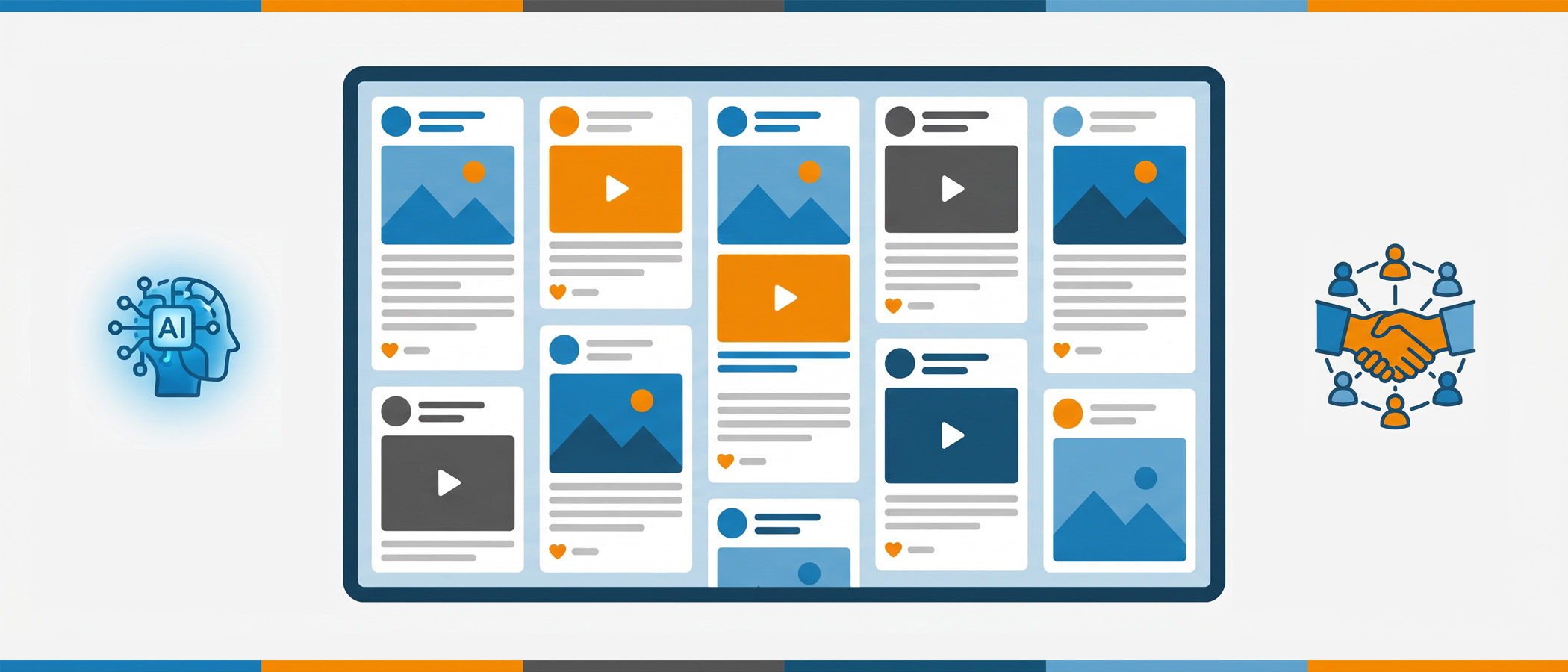
Artificial intelligence is changing events faster than most people expected. Planners can now write marketing copy in seconds, generate event descriptions overnight, and produce social media posts by the dozens. AI tools can summarize session content before a speaker finishes talking. They can create personalized schedules for thousands of attendees without human input.
This shift has clear benefits. Tasks that once took hours now take minutes. Small teams can produce content at a scale that used to require entire departments. The barrier to entry for creating polished event materials has dropped significantly.
But this same speed has created a new problem: noise.
When everyone has access to the same AI tools, everyone starts producing similar content. Attendees receive more emails, see more social posts, and encounter more marketing messages than ever before. Events now compete for attention in an environment that is louder and more crowded than at any point in history.
This raises an important question for anyone planning events in 2025 and beyond. If AI can generate content at scale, what actually makes an event worth attending? What separates a forgettable conference from one that people talk about for years?
The answer has nothing to do with technology. It has everything to do with people.
What AI Cannot Replicate
AI excels at tasks that follow patterns. It can analyze data, recognize trends, and produce text that sounds human. But certain experiences remain outside its reach.
Shared Moments Between People
When a speaker shares something vulnerable and the room goes quiet, that silence means something. When attendees laugh together at an unexpected joke, that laughter creates a bond. These moments happen between humans, and they depend on presence. AI can describe what a shared moment might look like. It cannot create one.
 The Feeling of Belonging
People attend events because they want to feel part of something larger than themselves. They want to meet others who share their interests, challenges, or goals. This sense of belonging comes from real interaction, from eye contact and handshakes and conversations that go longer than planned. No algorithm can manufacture the feeling of walking into a room and thinking, “These are my people.”
Authentic Participation
AI can generate thousands of social media posts that look like they came from real attendees. It can produce testimonials, reviews, and comments. But authenticity is something audiences recognize, even when they cannot explain how. A genuine photo from an attendee carries weight that a stock image never will. A real question from the audience matters more than a scripted one. Participation that comes from actual humans has value precisely because it is scarce and real.
Why Human Connection Is the Core Value of Events
Events have always competed with alternatives. People could read a book instead of attending a conference. They could watch a webinar instead of traveling to a workshop. They could email questions instead of raising their hand in a room full of strangers.
What justifies the time, expense, and effort of attending an event in person? The answer is human connection.
AI makes this answer more true, not less. In a world where content is everywhere, experiences that cannot be replicated become more valuable. The handshake with a potential client. The conversation at lunch that leads to a new idea. The moment when you realize the person next to you faced the same problem you did and found a solution. These experiences justify plane tickets, hotel rooms, and days away from the office.
Event planners who understand this principle will design events differently than those who focus only on content delivery. Content can be consumed anywhere. Connection requires presence.
The Rising Value of Real Engagement
As AI-generated content floods the market, authentic engagement becomes a differentiator. Sponsors want to know that real people saw their message. Attendees want to know that their contributions matter. Organizers want to show that their events create genuine community, not just impressions.
This shift affects how planners should think about measurement. Raw numbers like attendance counts or page views matter less when bots can inflate them. What matters more is evidence of real participation.
- Did attendees post about the event using their own words and photos?
- Did they engage with each other, not just with the stage?
- Did sponsors see authentic user-generated content featuring their brand?
- Did the event create memories that attendees will carry with them?
These questions point toward a different kind of success metric. Instead of asking “How many people saw this?” planners should ask “How many people participated?” Designing events around participation requires different tools and different thinking.
Designing Events for Human-First Engagement
Planners can take specific steps to prioritize human connection over content volume. These approaches do not require abandoning technology. They require using technology to amplify what makes events valuable in the first place.
Make Participation Easy and Visible
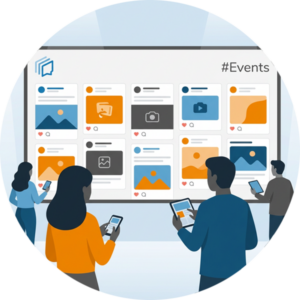 When attendees see others participating, they are more likely to join in themselves. This is why social walls have become popular at conferences, trade shows, and corporate meetings. A social wall displays real posts from real attendees in real time, creating a visible record of participation that encourages others to contribute.
Everwall, for example, aggregates content from 15 different sources including Instagram, X, LinkedIn, and direct web submissions via QR codes. This means attendees do not need to be social media experts to participate. They can submit a photo or comment directly, and it appears alongside posts from other attendees. The result is a living display that reflects the actual experience of the people in the room.
This kind of tool serves two purposes. First, it captures authentic participation that sponsors and organizers can point to as evidence of engagement. Second, it creates a sense of community among attendees who see their contributions valued and displayed.
For planners looking to increase participation rates, designing prompts into your event agenda can remove confusion and give attendees clear moments to contribute.
Prioritize Quality Over Quantity
AI makes it easy to send more emails, create more posts, and produce more content. But more is not always better. Attendees are tired of noise. They respond better to fewer, more meaningful touchpoints.
This principle applies to event communication before, during, and after the event. Instead of flooding inboxes with generic updates, send fewer messages that contain information attendees actually want. Instead of posting dozens of times per day on social media, post less often with content that reflects real moments from the event.
Create Opportunities for Unscripted Interaction
The most memorable moments at events often happen outside the formal program. The conversation during a coffee break. The connection made while waiting in line. The question asked after a session ends.
Planners can design for these moments by building buffer time into schedules, creating comfortable spaces for informal gathering, and resisting the urge to fill every minute with programmed content. Sometimes the best thing an event can do is get out of the way and let people talk to each other.
Use Technology to Support, Not Replace, Human Connection
The goal is not to avoid technology. The goal is to use technology in ways that bring people together rather than separating them. A social wall works because it takes what people are already doing and makes it visible and communal. A good event app works because it helps attendees find each other and navigate the experience together.
Technology that isolates attendees in their own screens works against connection. Technology that gives people reasons to look up, engage, and share works for it.
Capturing What Matters
In an AI world, proof of genuine participation becomes more important than ever. Sponsors want to see real people engaging with their brand. Organizers want evidence that their event created community. Attendees want to feel that their presence mattered.
This is why platforms designed to capture authentic human participation have become valuable. Everwall’s social walls display user-generated content from attendees in real time, creating a visual record of actual engagement. Unlike AI-generated filler, this content comes from real people having real experiences. It can be used during the event to build energy, and it can be repurposed afterward to demonstrate value to sponsors and stakeholders.
The platform supports real-time moderation, so organizers maintain control over what appears on screen. It offers multiple layout options for different venue sizes and configurations. And because it includes a website embed at no extra cost, the same content can reach remote audiences and live on after the event ends.
For planners thinking about how to measure engagement as a meaningful metric, capturing authentic participation provides evidence that goes beyond simple attendance numbers.
The Differentiator Moving Forward
The events that thrive in an AI-saturated world will be those that deliver what AI cannot: genuine human connection, shared experiences, and authentic participation.
 This does not mean ignoring AI tools. Planners can and should use AI to handle repetitive tasks, generate first drafts, and analyze data. But the value proposition of events must remain centered on what happens between people. The content can be found elsewhere. The connection cannot.
As you plan your next event, ask yourself: What am I offering that attendees cannot get from a screen at home? If the answer is “better content,” you may need to rethink your approach. If the answer is “a chance to be part of something real, with other people who care about the same things,” you are on the right track.
Real participation is the differentiator. Design for it, capture it, and show the world what human connection looks like.
Ready to capture authentic participation at your next event? Everwall’s event social walls display real-time posts from your attendees, creating visible proof of engagement that sponsors love and attendees remember. See how easy it is to turn your audience into active participants.
Pretty good, right? Share this with your people.


