


Event Engagement Use Cases: 3 Ways to Drive Participation
Published on June 8, 2026
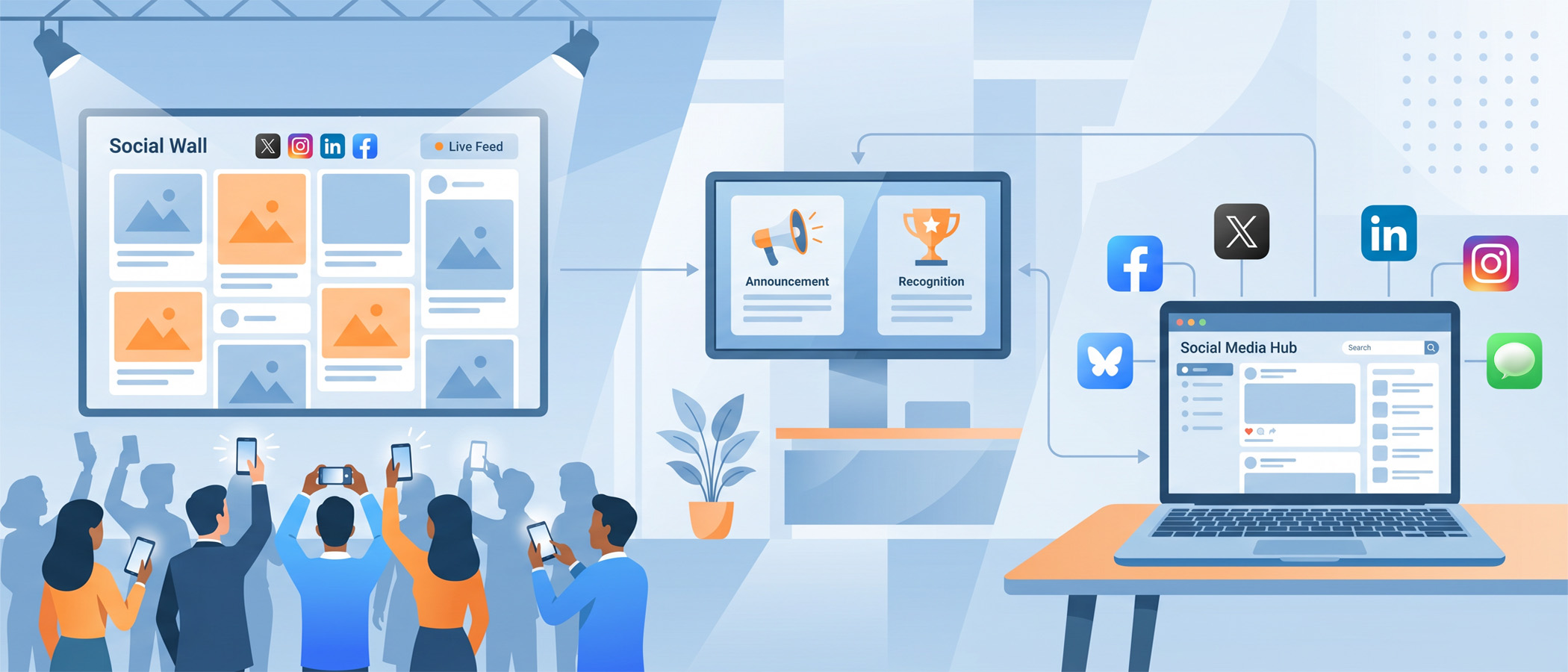
Your next event needs more than a good speaker lineup or a well-decorated venue. Attendees today expect to participate, not just observe. They want to see their photos on screen, watch their comments appear in real time, and feel like part of something bigger than themselves.
But here’s the challenge: participation doesn’t happen the same way at every event. A three-day conference has different needs than a school graduation. An office lobby requires something different than a product launch website. The engagement format you choose matters as much as the content you create.
This guide will help you match the right engagement tool to the right situation. Whether you need live participation during an event, ongoing visibility in a physical space, or lasting engagement on your website, understanding these distinct use cases will help you make smarter decisions for your audience.
The Three Jobs of Event Engagement
Every engagement tool exists to accomplish one of three primary jobs. Recognizing which job you need to accomplish is the first step toward choosing the right format.
Live Participation at Events
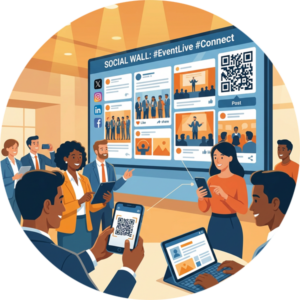
The first job focuses on real-time interaction during a specific timeframe. Think conferences, galas, graduations, and product launches. Attendees post content using a hashtag or QR code, and that content appears on screens throughout the venue within seconds.
This format works best when you want to:
 Create energy and excitement in the room
- Encourage attendees to share their experience publicly
- Display sponsor messages alongside attendee content
- Give remote viewers a window into the live experience
A social wall for events pulls content from multiple sources including Instagram, X, LinkedIn, and direct submissions via web forms or SMS. The real-time updates keep the display fresh and give attendees a reason to keep watching.
Ongoing Visibility in Physical Spaces
The second job involves continuous engagement that runs for weeks, months, or years. This applies to office lobbies, retail stores, restaurants, and campus common areas. The content rotates regularly but doesn’t depend on a specific event happening.
Organizations use this format to:
- Celebrate employee achievements and company milestones
- Display customer reviews and social proof
- Share company news and updates
- Build culture through visual storytelling
Unlike event-focused displays, ongoing digital signage requires less active management. You set up the content sources, establish moderation rules, and let the system run. New posts appear automatically as they’re published on social media or submitted through internal channels.
Post-Event Continuity on Websites
The third job extends engagement beyond the venue walls and into the digital space. Social media hubs embedded on websites keep the conversation going after attendees go home. They also bring event energy to people who couldn’t attend in person.
Website embeds serve these purposes:
- Archive event content for future reference
- Give remote audiences access to the social conversation
- Provide ongoing social proof for marketing pages
- Create evergreen content that updates automatically
A social media hub can run before, during, and after an event. Before the event, it builds anticipation. During the event, it includes virtual attendees. After the event, it preserves memories and extends the content’s lifespan.
Matching Use Cases to Industries and Goals
Different organizations have different engagement priorities. This section breaks down common scenarios by industry and suggests which format fits best.
Conferences and Professional Events
Primary goal: Maximize attendee participation and demonstrate value to sponsors
Conferences benefit most from live event walls displayed on large screens in session rooms, hallways, and networking areas. The real-time updates create momentum as attendees see their peers posting and want to join in.
Scheduled engagement prompts work well here. During a keynote, display a question for attendees to answer. Between sessions, show sponsor messages mixed with attendee photos. Using your event agenda to drive participation helps attendees know exactly when and how to contribute.
For multi-day conferences, adding a website embed lets attendees review highlights from previous days and helps remote viewers follow along. This combination of live display and web embed covers both in-person and virtual audiences.
Schools and Universities
Primary goal: Include families and create memorable shared experiences
Graduation ceremonies represent one of the most emotional moments in a student’s life. Families want to participate, even if they’re sitting in the back row of a stadium or watching from another state.
Schools use social walls to display shout-outs from family members, photos from the ceremony, and congratulatory messages from alumni. Submissions via QR codes and web forms work especially well here because many family members don’t use Instagram or X regularly.
Beyond graduation, universities use ongoing digital signage in student centers and athletic facilities to celebrate achievements, promote upcoming events, and connect students to campus life. This creates a sense of belonging that extends throughout the academic year.
 Corporate Communications
Primary goal: Reinforce company culture and recognize employees
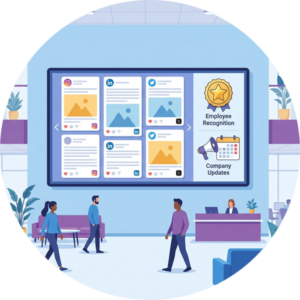
Office lobbies and break rooms provide ideal locations for ongoing social walls that celebrate team wins. Employee recognition posts, project milestones, and company news appear on screens throughout the building, reaching staff members who might not check email regularly.
This format proves especially valuable for organizations with frontline workers who don’t sit at desks. Manufacturing floors, retail locations, and healthcare facilities can use digital signage to keep all employees informed and included.
Corporate events like sales meetings, holiday parties, and team retreats benefit from live event walls. These displays encourage participation and create content that can be repurposed later for internal communications.
Nonprofits and Faith-Based Organizations
Primary goal: Build community and honor contributions
Nonprofits use social walls to connect supporters, celebrate donors, and amplify their message. Fundraising galas display donor recognition alongside attendee photos. Memorial events allow families to submit tribute messages that appear on screen.
Churches and religious organizations create community through shared digital experiences. Youth group events, holiday celebrations, and weekly services can all incorporate social participation. The key is making it easy for people of all ages to contribute without requiring technical knowledge.
For ongoing engagement, nonprofit websites benefit from embedded social hubs that showcase supporter stories and user-generated content. This social proof helps convert website visitors into donors and volunteers.
How Everwall Supports Each Use Case
Everwall functions as a multipurpose engagement platform rather than a single-purpose tool. The same underlying technology adapts to different situations based on your needs.
For live events: Everwall’s event social wall supports 15 different content sources and offers 12 layout options. Real-time updates keep displays fresh, and built-in moderation tools ensure only appropriate content appears. Every event wall includes a website embed at no extra cost, so you can share the experience online simultaneously.
For ongoing spaces: Social media digital signage runs continuously without requiring daily management. Content sources update automatically, and scheduled content blocks let you highlight specific messages at specific times. This works well for lobbies, restaurants, and campus displays.
For websites: Social media hubs embed directly into any website using a simple code snippet. The hub updates in real time as new content is posted, keeping your site fresh without manual intervention.
The practical benefit of using one platform across all three use cases is consistency. Your branding, moderation rules, and content sources stay the same whether you’re running a live event, a lobby display, or a website embed. You learn one system and apply it wherever you need engagement.
Everwall has an All Access plan that provides unlimited access to all three products so you can use any or all of them where it makes sense for one flat rate.
Starting Small and Growing Over Time
You don’t need to implement everything at once. Most organizations find success by starting with one use case and expanding based on results.
Month one: Run a social wall at your annual conference. Track participation rates, collect attendee feedback, and measure social media reach. This gives you baseline data and builds internal confidence in the approach.
Month three: Embed the event content on your website. Let the social hub continue displaying content from the conference while also pulling in new posts from your ongoing hashtag. This extends the life of your event content.
Month six: Install ongoing digital signage in your office or venue. Use the same branding and content sources you established for the event, but shift focus toward employee recognition, company news, or customer content.
This progression allows each phase to inform the next. You learn what content resonates, which sources produce the best material, and how your audience prefers to participate. By the time you’re running all three formats, you’ve refined your approach through real experience.
Choosing Based on the Job, Not the Trend
The event industry constantly introduces new technology and new terminology. It’s tempting to adopt whatever seems most current or impressive. But effective engagement comes from matching the tool to the job.
Ask yourself these questions before selecting an engagement format:
 When does engagement need to happen? If it’s during a specific event, you need a live wall. If it’s ongoing, you need digital signage or a website hub.
- Where will people see the content? Large screens at a venue call for display-optimized layouts. Website visitors need an embed that integrates with your site design.
- Who is your audience? Tech-savvy attendees might post readily on social media. Others need simpler submission options like QR codes or SMS.
- What happens after the event? If you want content to live on, plan for a website hub from the start. If it’s a one-time celebration, a live wall might be sufficient.
The answers to these questions point toward the right format for your situation. Sometimes you’ll need multiple formats working together. Other times, a single approach handles everything.
The organizations that get the most value from engagement tools are the ones that think clearly about what they’re trying to accomplish. They don’t chase features or follow trends blindly. They identify the job, select the format that does that job well, and execute consistently.
Your audience wants to participate. Give them the right opportunity, in the right place, at the right time. That’s how engagement actually works.
Ready to explore which engagement format fits your next event or ongoing needs? Everwall’s event social wall gives you the flexibility to start with live event displays and expand to website embeds and digital signage as your needs grow. See how one platform can handle all three engagement jobs for your organization.
Pretty good, right? Share this with your people.


