


Event Engagement Tools That Actually Scale for Agencies
Published on February 23, 2026
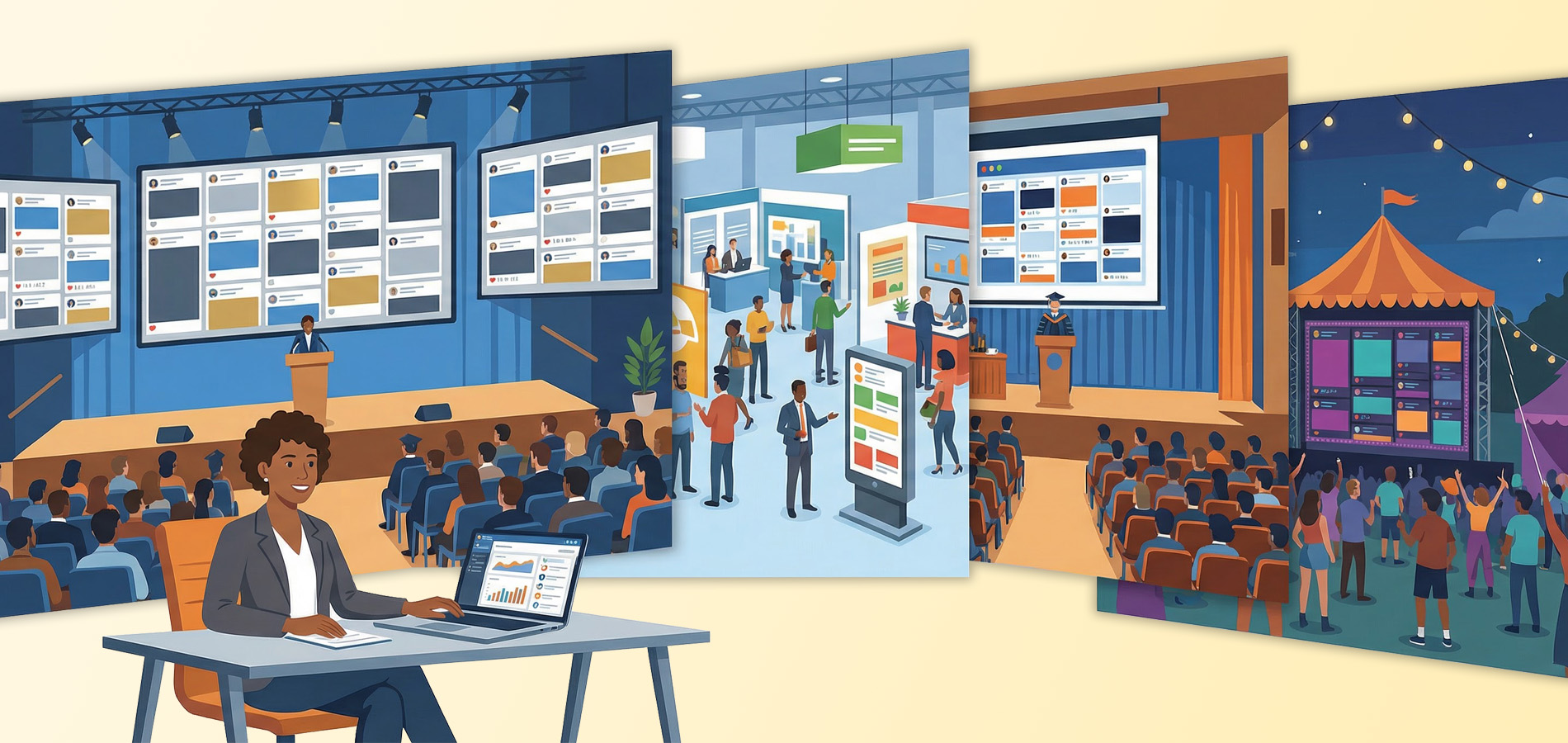
Every new client brings the same familiar cycle. A discovery call leads to custom specs, which lead to fresh vendor research, new contracts, and another round of setup. For event agencies managing multiple clients and dozens of events per year, this pattern eats into margins and creates unnecessary risk.
The problem isn’t a lack of tools. Agencies have access to more event technology than ever before. The problem is that many event engagement tools are designed for one-time use rather than ongoing agency workflows, which makes scaling difficult. Engagement platforms that work well for a one-time activation often break down when agencies need to reuse workflows, branding structures, and engagement formats across multiple clients.
When your team spends hours rebuilding workflows for each event, you’re not just losing time. You’re losing the consistency that makes client relationships predictable and profitable.
The Hidden Cost of One-Off Event Setups
Building engagement infrastructure from scratch for every event creates several problems that compound over time.
Time Drain on Your Team
 Each new event requires your team to evaluate options, configure settings, test integrations, and train staff. Even with experienced people, this process takes hours. Multiply that by the number of events you run each quarter, and you’re looking at significant labor costs that never show up on a line item.
Inconsistent Client Experiences
When every event uses a different mix of tools and configurations, quality control becomes difficult. One client gets a polished experience because your team had extra time. Another gets a rushed setup because three events landed in the same week. Clients notice these differences, even if they can’t articulate what went wrong.
Knowledge Loss Between Projects
Lessons learned during one event rarely transfer to the next when you’re constantly switching tools. Your team discovers what works, but that knowledge stays locked in individual heads or scattered notes. Without repeatable systems, you’re always starting from a baseline that’s lower than it should be.
This is where engagement tools designed for repeatable deployment across events create long-term operational advantages for your agency.
What Scalable Engagement Actually Looks Like
Scalable engagement isn’t about finding one tool that does everything. It’s about building systems your team can reuse, refine, and deploy quickly across different clients and event types.
Repeatable processes mean your team knows exactly what steps to follow, what assets they need, and how long each phase takes. No guesswork, no reinventing.
Reusable infrastructure means the platforms, templates, and integrations you’ve invested time in can serve multiple clients without starting over. Strong event engagement tools support this model by allowing teams to reuse engagement formats while adapting branding and messaging per client. You configure once and adapt as needed.
Consistent performance means clients get the same level of quality whether it’s their first event with you or their tenth. Your reputation builds on reliability, not luck.
Agencies that build these systems find they can take on more work without proportionally increasing headcount. They also have more capacity for the creative and strategic work that clients actually want to pay premium rates for.
Rising Client Expectations Around Engagement
The bar for audience engagement has shifted. Clients used to be impressed by any form of interactivity. Now they expect engagement that ties directly to their goals.
A few years ago, adding a hashtag display or live poll felt innovative. Today, clients want to know how that engagement connects to attendee satisfaction, social reach, or brand awareness. They’re asking for metrics, not just moments.
This shift means agencies can’t rely on flashy features that look impressive but don’t deliver outcomes. Gimmicks get questioned. Results get renewed.
When clients prioritize engagement as a key performance indicator, they need partners who can deliver it reliably. Agencies that approach engagement strategically, with repeatable systems rather than improvised solutions, become indispensable.
Tools That Work Across Multiple Clients
The most valuable event engagement tools share common characteristics: they’re flexible enough to adapt to different brands, simple enough for quick deployment, and stable enough to trust at scale.
Social walls represent a good example of this model. Platforms like Everwall allow agencies to create branded displays that pull content from major social networks and other sources, then reuse that infrastructure across clients. Instead of researching new display solutions for each event, agencies can deploy a proven system with client-specific customization.
What makes this approach work for agencies specifically:
- Brand flexibility allows the same underlying platform to reflect completely different visual identities
- Multi-source content aggregation means you’re not limited to one social network or input type
- Real-time updates keep displays current without manual intervention during the event
- Website embed options extend the investment beyond the physical event space
The key distinction is between tools you have to rebuild versus tools you can reconfigure. The most effective engagement tools fall into the second category, enabling agencies to scale engagement without rebuilding systems for every event.
For conferences and larger events, having engagement systems that support participation design rather than hoping for organic interaction makes a significant difference in outcomes.
How Scalable Systems Improve Agency Margins
When the tools you choose for event engagement scale, the financial benefits for your agency compound.
Reduced Setup Time
A system you’ve deployed before takes a fraction of the time to deploy again. Your team already knows the configuration options, the common pitfalls, and the fastest path to launch. This time savings translates directly to either higher margins per event or capacity for additional projects.
Faster Client Onboarding
 New clients can get up to speed quickly when you’re not explaining a novel approach for each engagement. You can show examples from previous events, reference documented workflows, and set realistic expectations based on actual experience.
Predictable Results
When you know how a system performs because you’ve used it dozens of times, you can make promises with confidence. This reduces the risk of disappointing clients and the cost of fixing problems under pressure.
Lower Training Costs
Staff turnover and event-day contractors become less disruptive when your systems are standardized. New team members can learn one approach deeply rather than trying to adapt to whatever tool each event happens to use.
One way agencies measure whether their engagement tools truly scale is by tracking the ratio between setup hours and event hours. If that ratio decreases over time as you run more events, your systems are working.
Building an Engagement Stack That Grows With You
Rather than evaluating tools in isolation, consider how they fit into the broader event engagement stack that serves your agency’s needs.
Foundation Layer
Start with platforms that handle your most common use cases across the widest range of clients. Social walls, basic polling, attendee communication tools, and other conference engagement tools often fall into this category.
Specialization Layer
Add tools for specific event types or client industries as needed. A platform that works perfectly for corporate conferences might not suit music festivals, and that’s fine. The goal is having reliable options for each category you serve.
Integration Layer
Look for tools that connect with each other and with your other systems. Ideally, data should flow between platforms without manual exports and imports. Social walls that integrate with event apps eliminate the need to manage separate systems for in-person and digital attendees.
Measurement Layer
Make sure you can demonstrate results to clients. This includes both quantitative metrics and qualitative evidence of engagement. Understanding the ROI of your engagement tools helps justify continued investment to clients and validates your agency’s approach.
The best stacks evolve over time. You’ll add tools, retire others, and refine your processes based on what actually works. The important thing is having intentional structure rather than accumulating random solutions.
Common Mistakes Agencies Make With Engagement Tools
Chasing Features Over Fit
A tool with more features isn’t necessarily better for your agency. What matters is whether the features you need work reliably and whether the platform fits your workflow. Complexity you don’t use just creates confusion.
Ignoring the Learning Curve
Some powerful platforms take significant time to master. If your team is constantly switching between tools or learning new systems, that expertise never develops. If you’re an Everwall agency partner, not only can we help with training your team on our platform, but we also work with you as a part of your team and implement the best practices we learn from the many events we do, and we share those best practices with your team as we work with you.
Underestimating Support Needs
During live events, problems need fast solutions. Tools with limited support options become liabilities when something goes wrong at the worst possible moment. Factor support quality into your evaluation. When you work with Everwall you get a dedicated account manager you can call or text anytime. Since it’s the same person, they know your event inside and out.
Forgetting the Client Experience
Tools that are easy for your team but confusing for clients create friction. If clients can’t understand how the tool you chose for their event works or how to view results, you’ll spend time explaining instead of executing.
Questions to Ask Before Adopting New Engagement Tools
Before adding another platform to your stack, work through these considerations:
- Can this tool serve at least three current or prospective clients?
 How long will it take our team to become proficient, and does the provider of this new tool offer training to fast-track our team?
- What happens if the tool fails during a live event?
- Does this replace something we already have, or does it add to complexity?
- Can we demonstrate measurable results to clients?
- Will this still make sense if our client roster changes?
Asking these questions systematically helps avoid tool sprawl and ensures that what you adopt actually contributes to scalability.
The Agency Advantage
Agencies that invest in scalable event engagement tools don’t just save time, they free their teams to focus on the creative and strategic work clients actually want to pay for.
Clients increasingly recognize the difference between agencies that improvise and agencies that execute with confidence. As engagement expectations keep rising, that gap only widens.
Building a scalable foundation takes intention: saying no to tools that don’t fit, investing in documentation and training, and choosing platforms designed for repeated use. The payoff for your agency is better results, less stress, and margins that make growth sustainable.
Everwall’s Event Social Walls give agencies a reusable engagement platform that works across clients and event types. With support for 15 content sources, real-time updates, and flexible display options, it’s built for teams that need reliable performance at scale. Start building engagement systems your clients will notice and your team will appreciate.
Pretty good, right? Share this with your people.


