


Audience Participation Should Be Designed, Not Hoped For
Published on January 26, 2026
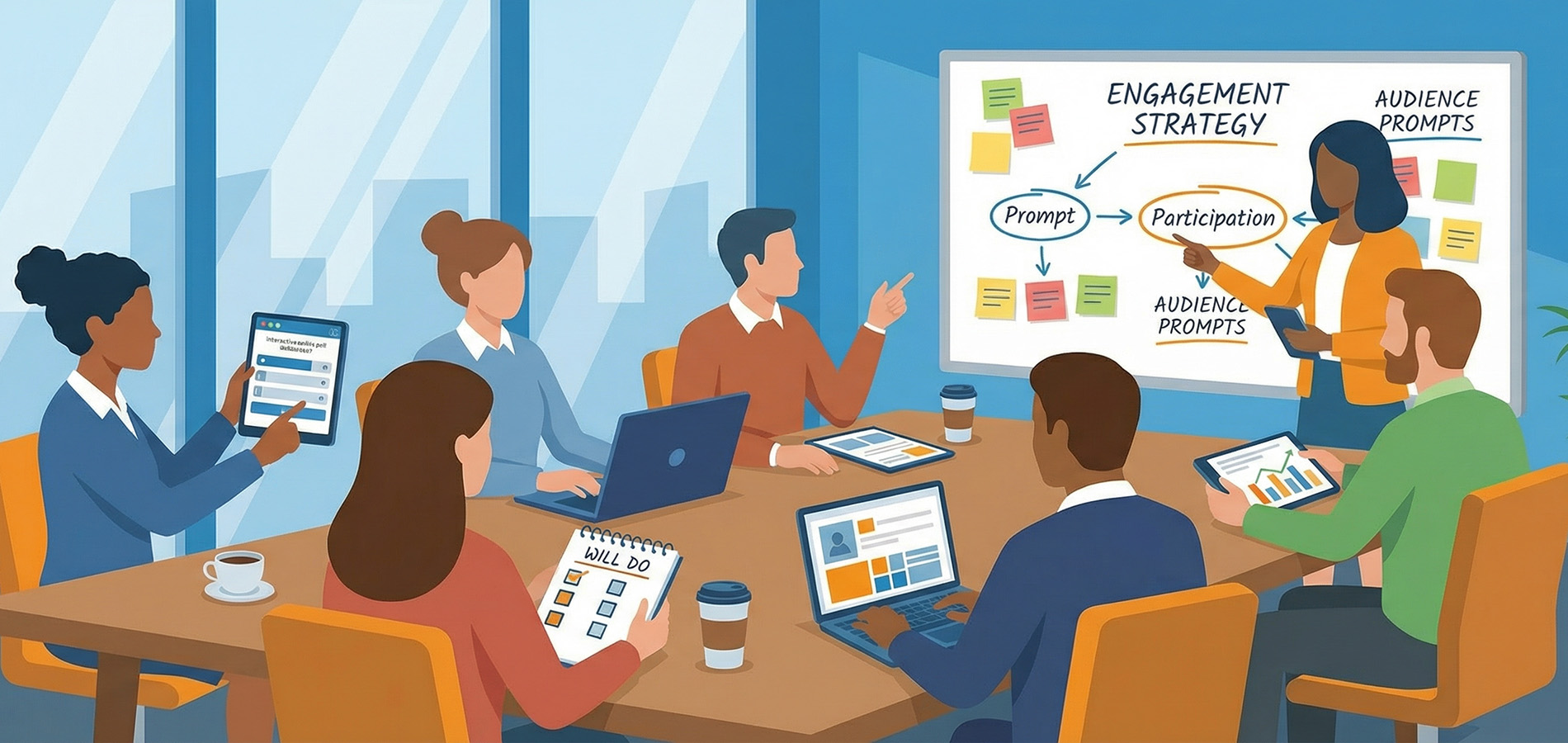
Imagine standing in a room full of 500 people. A speaker finishes their presentation and asks the audience to share their thoughts on social media using the event hashtag. A few seconds pass. Then a minute. The screen displaying the social feed remains mostly empty, save for a couple of posts from the event organizers themselves.
This scene plays out at conferences, trade shows, and corporate gatherings every single day. Event planners spend months coordinating speakers, venues, catering, and technology. But when it comes to audience participation, many rely on something far less reliable: hope.
The problem isn’t that attendees don’t want to engage. The problem is that most events never design participation into the experience. They add a hashtag to the program, put up a few signs, and assume people will figure it out. When engagement falls flat, the blame often lands on the audience for being passive or distracted.
But what if the real issue has nothing to do with the audience at all?
The “Wait and See” Approach to Event Engagement
Event planning involves countless decisions. Which venue? What date? Who speaks? How do we handle registration? These questions receive hours of attention because they directly affect whether the event happens at all.
Audience participation, on the other hand, often gets treated as an afterthought. It becomes a “nice to have” rather than a “must have.” Planners assume that if the content is good enough, people will naturally want to talk about it. If the speakers are engaging, surely attendees will post photos and share quotes.
This assumption treats engagement as something that either happens or doesn’t, based on factors outside the planner’s control. It puts all the responsibility on the audience while giving them almost none of the tools or guidance they need to participate.
Consider how this plays out in practice:
- A hashtag gets printed on badges and banners but never explained
- Social media instructions appear once at the start of the event and then disappear
- No specific prompts guide what attendees should share or when
- The purpose of participating remains unclear
Without structure, engagement becomes random. Some events get lucky with a few enthusiastic participants. Most don’t.
What Actually Stops People from Participating
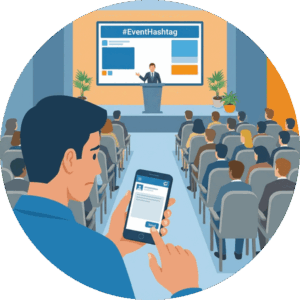 When attendance is high but participation is low, it’s tempting to blame the audience. They’re too busy checking emails. They’re more interested in networking than posting. They just don’t care enough.
These explanations miss what’s really happening. Most people at events actually want to participate. They’re interested in the content, excited to be there, and happy to share their experience. But something holds them back.
Fear of Making a Mistake
Nobody wants to be the person who uses the wrong hashtag or posts something that seems out of place. When instructions are unclear, the safest choice is to do nothing. Attendees worry about looking foolish, so they stay silent.
Confusion About What to Do
A hashtag on a screen doesn’t tell anyone what to post. Should they share a photo? A quote? Their opinion? Without guidance, the range of options feels overwhelming. When everything is possible, nothing feels right.
No Clear Reason to Participate
“Share your experience using #EventName” sounds like an instruction, but it doesn’t answer the fundamental question: why should I? If there’s no visible benefit, recognition, or purpose, participation feels pointless.
Not Seeing Others Participate
Humans are social creatures. We look to others for cues about appropriate behavior. If the social wall is empty or the feed is quiet, attendees assume participation isn’t happening and isn’t expected. They follow the crowd, even when the crowd is doing nothing.
These barriers don’t mean people are disengaged. They mean the event hasn’t given people a clear, safe, and obvious path to engagement.
The Psychology Behind Meaningful Participation
Understanding why people participate requires looking beyond logistics and into human behavior. Research in social psychology offers useful insights.
People need cues. In any social situation, we look for signals about what’s expected. At a concert, when others stand and clap, we stand and clap. At a library, when others whisper, we whisper. Events work the same way. When attendees see others posting and sharing, they’re more likely to join in.
People need permission. Many attendees feel uncertain about whether they “should” be posting during a presentation. Is it appropriate? Will it distract others? Explicit encouragement from speakers or organizers removes this doubt. Saying “Take a moment right now to share your favorite takeaway” tells people that participation is not only allowed but welcomed.
People need to feel safe. Contributing to a public feed involves risk. What if my post sounds silly? What if no one likes it? Events that create low-stakes opportunities for participation reduce this anxiety. Simple prompts, positive reinforcement when posts appear on screen, and a supportive atmosphere all contribute.
When events ignore these psychological factors, they create environments where silence becomes the default. When events address them deliberately, participation becomes almost natural.
What Designing Participation Actually Looks Like
 Moving from hope to design means making specific choices about how, when, and why people will engage. It means treating audience participation as a planned component of the event rather than a spontaneous bonus.
Clear and Repeated Instructions
A single mention of the event hashtag isn’t enough. Instructions should appear at multiple points throughout the event. This includes verbal reminders from speakers, visual prompts on screens between sessions, and printed materials that attendees can reference.
Specific Prompts at Specific Moments
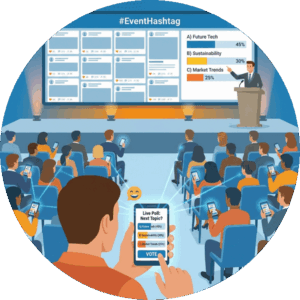
Instead of generic calls to “share your experience,” effective prompts give attendees something concrete to do. “Post your answer to this question using the hashtag”, or “Share a photo of your favorite booth and tag us”, or “open your phone and vote in this poll” creates clarity. Tying these prompts to specific moments in the agenda makes them feel relevant.
Visible and Immediate Feedback
When someone takes the time to post, seeing their contribution appear on a display creates a small moment of recognition. This feedback loop encourages continued participation and signals to others that engagement is active. A social wall displayed prominently in the venue serves this purpose well.
Purposeful Coordination with the Event Schedule
Participation shouldn’t compete with the event content. It should complement it. Designing specific moments for engagement, such as breaks between sessions, allows attendees to participate without feeling like they’re missing something. Coordinating with the event schedule makes participation feel like part of the experience rather than a distraction from it.
Low-Barrier Entry Points
Not everyone wants to compose a lengthy post. Offering multiple ways to participate lowers the barrier. Photo-sharing prompts, quick polls, and simple reactions all count. Platforms that support multiple content sources like social networks, web forms, and SMS give attendees flexibility in how they engage.
Building Engagement Into Your Event Planning Strategy
Treating participation as a design challenge changes how planners approach events. Instead of asking “Will people engage?” the question becomes “How will we enable engagement?”
This shift affects decisions throughout the planning process:
During venue selection, consider where social displays will be placed and whether the space supports visibility from all areas.
When developing the agenda, identify specific moments for audience interaction and build in time for people to actually participate.
In speaker preparation, coach presenters on how to encourage engagement and incorporate prompts into their sessions.
For technology choices, select tools that support structured participation rather than just passive display. Platforms like Everwall that allow for guided prompts, agenda integration, and real-time display create the infrastructure for intentional live event engagement.
After the event, review participation data to understand what worked and what didn’t. This feedback informs future events.
The goal isn’t to force participation or make engagement feel mandatory. It’s to remove the obstacles that prevent willing attendees from joining in.
Why Platforms Matter More Than You Think
 A hashtag printed on a banner can’t structure engagement. A passive display that shows random posts can’t guide participation. The tools you choose directly affect whether your engagement design actually works.
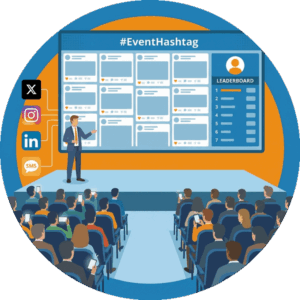
Platforms designed specifically for event engagement offer features that support intentional participation. Real-time content aggregation from multiple sources like X, Instagram, LinkedIn, and direct submissions gives attendees flexibility. Display options that fit different venue layouts ensure visibility. Moderation tools maintain quality and brand safety.
Everwall’s event social walls are built with this philosophy in mind. They support 15 different content sources and offer multiple layout options to fit any event space. The platform is designed not just to display content, but to facilitate the kind of structured engagement that actually works. For example, Everwall supports announcements to use as call to actions, leaderboards for gamification, and real-time polls for participation. You can even show an agenda on the social wall to ensure people know what’s coming up.
What matters most isn’t any single feature, it’s whether the platform helps you close the gap between hoping for engagement and designing for it.
The Difference Is in the Decision
Events that succeed at audience participation share something in common. They don’t leave engagement to chance. They make deliberate choices about how participation will happen, create the conditions that enable it, and use tools that support it.
Events that struggle often have equally engaged attendees who simply weren’t given a clear path to contribute.
The question every event planner should ask isn’t whether their audience is engaged enough. It’s whether they’ve built participation into the event design itself.
Are you designing participation, or hoping for it?
Ready to design engagement into your next event? Everwall’s event social walls give you the tools to create structured, visible, and meaningful audience participation. See how intentional engagement design can change your events.
Pretty good, right? Share this with your people.


