


Medical Meeting Social Wall Moderation and Compliance
Published on October 7, 2026
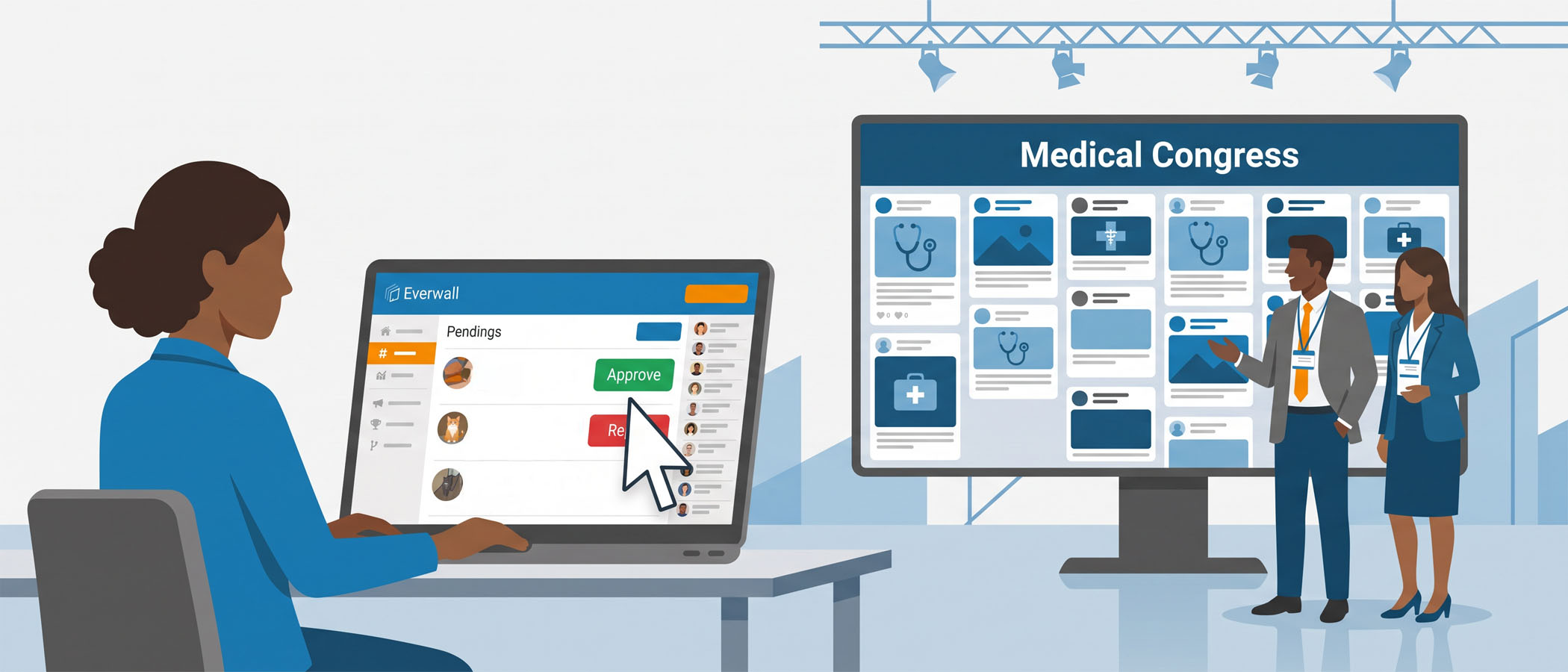
If you run an annual congress, your medical meeting social wall should be the least of your worries at 6 a.m. Your real fear might be a slide from a late-breaking session reaching a public feed before the study’s publication, or a public teardown of how a clinical trial was ran. A social wall can feel like one more place where that could go wrong. However, with the right controls, it becomes the opposite. It becomes the single display where you decide exactly what thousands of physicians, industry guests, and reporters see.
This article walks through the two main risks that actually matter at a medical conference. It explains how moderation gives you control over both and includes policy language you can adapt for your attendee guidelines. Compliance comes first here. Attendee participation is worth having, but at a medical meeting it is the second priority when you need to control the message.
The Two Risks Nobody Warns You About
Most articles about event social walls talk about profanity filters and off-topic spam. Those matter, but they are not what keeps a society’s meeting staff awake. There are two specific problems that a medical meeting has to plan for, and both are more about your rules than about bad actors. After doing hundreds of social walls for medical meetings at Everwall, outside of a few medical topics, we’ve noticed that the medical crowd, for the most part, aren’t pushing the boundaries with the common profanity or off-topic spam that general conferences have to deal with.
So what do they have to monitor for?
1. Photography of scientific sessions
Many medical societies restrict or ban photography inside session rooms. Presenters share unpublished data, patient images, and figures they do not want circulating before peer review. An attendee might snap a slide and post it with your meeting hashtag. That image can flow straight into any feed pulling that tag, including a public social wall on a lobby screen.
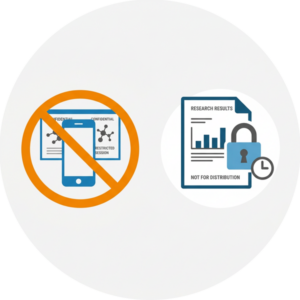 The wall itself is not the source of the problem. The photo already exists on a social network the moment someone posts it. But an unmoderated wall would put that image on a large display for everyone to see, which turns a single rule-breaking post into a very visible one.
2. Embargoed data leaking through attendee posts
Research at major meetings often carries an embargo. This means nobody can report the findings publicly until a set date and time. Journals and societies coordinate these embargoes carefully. An excited attendee who tweets a key result an hour early is not trying to cause trouble. But that post can break an embargo that a journal spent months arranging.
A social wall that displays posts automatically has no idea a study is embargoed. That is the whole reason automatic, unfiltered feeds are a poor fit for medical conference moderation. You need a person or a rule standing between the post and the screen.
Moderation Gives Your Medical Meeting Social Wall Control
Here is the shift in thinking that makes a medical meeting social wall work: treat the wall as a controlled display, not an open pipe. Everything an attendee posts is a request to appear. Nothing shows up until it clears your rules. That single change is what turns a liability into an asset.
A few moderation controls do the heavy lifting for a medical audience:
- Approval before display. No post reaches the screen until a moderator approves it. This is the setting you want for any large-scale medical meeting. An embargoed result or photographed slide stays in the queue, invisible to the room. A reviewer then decides what to approve, hold, or reject.
- Keyword filters. You can flag or automatically hold posts containing certain terms. These might include a drug name, a trial acronym, or the word “embargo.” Flagged posts still go to a human, but the system helps your moderators catch risky ones faster.
- Source filters. You decide which networks feed the wall. You can accept posts only through a web form or SMS instead of pulling from a public hashtag. Attendees submit directly, and moderators can screen photos before display.
- Takedown speed. If something slips through, you can pull a post off every screen right away. The same applies if a study’s status changes mid-session. Speed matters because hundreds of people may pass a busy lobby display each minute.
Apply the same controls across your displays
With Everwall, you can turn on approval-before-display moderation and use built-in keyword and source filters. Removing an approved post takes effect across all your screens and any website embed at once.
For more on the fundamentals, read our guide on the importance of social media wall moderation. It covers the basics that apply to any event.
Staffing the Moderation Queue
A moderated wall is only as good as the people watching the queue. An annual meeting can generate a heavy flow of posts during keynotes and poster sessions, and a single overwhelmed moderator is how mistakes happen. Staffing is where planning pays off.
Add as many moderators as you need
Everwall does not limit the number of moderators on your account. For a large meeting, that means you can put several people on the queue during peak sessions and scale back during quiet hours. Society staff, your comms team, and a medical affairs reviewer can all work the same queue at the same time without stepping on each other.
Moderate from anywhere, on any device
 Moderators do not have to sit in the back of the room. The moderation tools run in a browser, so reviewers can approve or reject posts from a phone, tablet, or laptop. They can work from the show floor, a session, or a remote location.
For embargoed research, this flexibility matters. The person who best understands a study’s status might be a medical reviewer sitting three time zones away. Everwall also offers a process for multi-tiered approvals if needed, which means your moderators can easily get a second opinion from someone who can better review a post for if it should be shown.
Let Everwall handle the queue
Some societies would rather not staff moderation at all, especially when their people already have too much to do. With the Managed Moderation service, Everwall’s team can manage the moderation queue against the rules you set for you.
You define what to allow, hold, and reject. Our moderators apply those rules in real time. Your staff keeps final say over policy while someone else watches the feed hour after hour.
Policy Language for Your Medical Meeting Social Wall
Clear rules protect you twice: they tell attendees what is expected, and they give your moderators a written standard to enforce.
Below is sample language you can adapt for your attendee guidelines and signage. Adjust it to match your society’s actual embargo and photography policies.
Social wall participation guidelines
We may display posts submitted with our meeting hashtag or through the on-site form on screens throughout the venue. Our moderators review all posts before they appear. We may decline any post at our discretion.
Do not post photographs of slides, posters, or data from scientific sessions. We do not permit photography of session content.
Do not post specific findings, figures, or conclusions from embargoed research before the embargo lifts. Check the program for embargo times.
We may remove posts that identify patients, share protected health information, or promote a commercial product.
Ask the meeting communications desk if you have questions about what you can share.
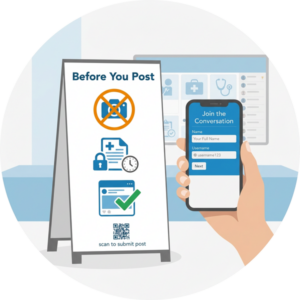
Post these rules where attendees will actually see them: in the mobile app, near any submission QR code, and on a slide before sessions begin.
A wall paired with clear signage sees fewer rule-breaking submissions in the first place, which lightens the load on your moderators. Our piece on collecting posts without requiring public social media explains how a QR-code submission form can keep everything flowing through a channel you control.
The One Surface Where You Decide What Gets Amplified
Step back and look at your meeting. Attendees are posting on their own accounts no matter what you do. Reporters are watching hashtags. Industry guests are sharing what they see. You cannot moderate the whole internet, and you should not try.
 What you can control is amplification. A public post from one attendee reaches their followers. That same post on a large screen in a packed lobby reaches everyone walking by, plus everyone who photographs the screen. The wall decides which posts get that second, much larger audience.
That is why a moderated social wall is worth having at a medical meeting, even in a cautious, compliance-first program. It gives the society control over which posts receive that extra visibility.
You can promote thoughtful session takeaways and genuine attendee excitement. Your moderators can reject embargoed data and photographed slides before they reach the screen.
Set up your medical meeting social wall before the first post
Everwall’s event social wall supports 16 content sources, including a direct web form and SMS. Those direct sources keep submissions inside a channel you manage.
You can also embed the wall in your meeting website or event’s app at no extra cost. The same moderation rules apply across those displays. With approval-before-display enabled, real-time updates keep approved content current.
For societies that want to move fast, our event social wall platform overview explains what the tool does and who it fits.
The takeaway for your annual meeting is simple. Set up the wall as a risk management tool first. Turn on approval before display, write your rules down, staff the queue or hand it to us, and only then enjoy the participation it brings. When compliance is the foundation, the engagement takes care of itself.
Ready to run a medical meeting social wall you actually control? Everwall’s Event Social Wall gives you approval-before-display moderation, keyword and source filters, unlimited moderators, and a Full Service option where our team runs the queue against your rules. Talk to us about your spring meeting and we will help you set it up so nothing reaches a screen unless you say so.
Pretty good, right? Share this with your people.


