


Trade Show Lead Capture Strategies That Convert in 2026
Last Updated on July 20, 2026
You spent thousands of dollars to be at the show. You paid for the booth, the travel, the shipping, and the staff. At the end of it all, you walk away with a stack of scanned badges and a spreadsheet full of names. Then two weeks later, your sales team tells you almost none of those “leads” answered a call or an email.
This happens more often than most exhibitors want to admit. The problem usually is not the number of leads. It is the quality of them. A badge scan tells you someone stood near your booth long enough to get scanned. It does not tell you if they cared, what they needed, or whether they will ever remember talking to you.
Good trade show lead capture is about collecting the right information at the right moment, then following up in a way that feels connected to the conversation you actually had. Below, we will walk through why the old method falls short and what to do instead.
Why Badge Scans Fail as Trade Show Lead Capture
Scanning a badge feels productive. You hear the beep, you see the name pop up, and it feels like progress. But that scan is often the weakest kind of lead you can get.
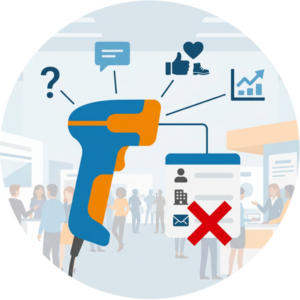 Here is what a badge scan usually gives you: a name, a company, a job title, and an email address. Here is what it does not give you: any reason for the person to remember your company later. There is no record of what they asked about, what problem they were trying to solve, or whether they were a real buyer or just grabbing a free pen.
When your sales team gets that list, every contact looks the same. A person who spent ten minutes asking detailed questions about pricing looks identical to someone who scanned in for a raffle and walked off. Without context, your team wastes time chasing people who were never going to buy, and they may rush past the few who were ready.
There is also a timing problem. Many teams wait days or even weeks to follow up. By then, attendees may have visited dozens of other booths, collected multiple brochures, and spoken with several companies. Without a memorable interaction or a quick follow-up, it becomes difficult for them to remember who you were or why they stopped by.
The problem is not that badge scanning is bad. It is that a scan alone gives you very little to work with.
What to Capture Beyond an Email Address
If a name and email are not enough, what should you be collecting instead? The answer is anything that helps you understand what the person actually wants. Think of it as capturing intent, not just identity.
Here are the kinds of details that make a lead worth following up on:
- Their main challenge. What problem brought them to your booth? One sentence in their own words is worth more than a dozen data fields.
- Their level of interest. Are they researching for later, comparing options right now, or ready to buy this quarter?
- A specific question they asked. If someone asked about a certain feature or price range, that gives your team an exact starting point for follow-up.
- Their role in buying. Are they the decision maker, or are they gathering info for someone else?
- A topic they cared about. Which product, service, or idea got them talking?
You do not need all of this for every person. Even one or two extra pieces of information turn a cold name into a warm lead. The goal is to give your sales team a reason to reach out that feels personal instead of generic.
The trick is collecting this without turning your booth into an interrogation. Nobody wants to fill out a long form while standing up. That is where participation comes in.
Participation-Based Trade Show Lead Generation
The best way to gather real information is to make people want to give it. When attendees take part in something at your booth, they naturally share what they care about. You get better data, and they get an experience they actually remember.
Here are a few ways to build participation into your booth so trade show lead generation becomes part of the fun instead of a chore.
Ask Live Questions
Set up a simple prompt at your booth, like “What is your biggest headache with [topic]?” Let people answer on a tablet, a card, or their phone. Their answers tell you exactly what they need, and that becomes your follow-up angle.
Run Quick Polls
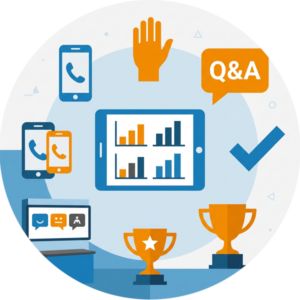 A one-tap poll gets people to stop and interact. Something like “How does your team currently handle X? A, B, or C” gives you a snapshot of where each person is. Their choice tells your sales team how to frame the first conversation after the show.
Post Booth Challenges
A small challenge, contest, or interactive demo gives people a reason to stay longer. The longer someone stays, the more you learn about them. Just make sure the entry step captures something useful, like their top question or their timeline for buying.
Use Prompts That Reveal Intent
Instead of “Enter to win,” try “Tell us what you are hoping to solve this year and we will send you a guide.” Now the entry itself doubles as a lead qualifier. You know who is serious and who just wanted the tote bag.
For more ideas along these lines, our guide on trade show engagement ideas covers tactics that turn passing glances into real conversations.
How Engagement Moments Create Follow-Up Context
Here is where participation and lead capture come together. When people take part in something visible, you create a record of what they cared about. That record is gold for your follow-up.
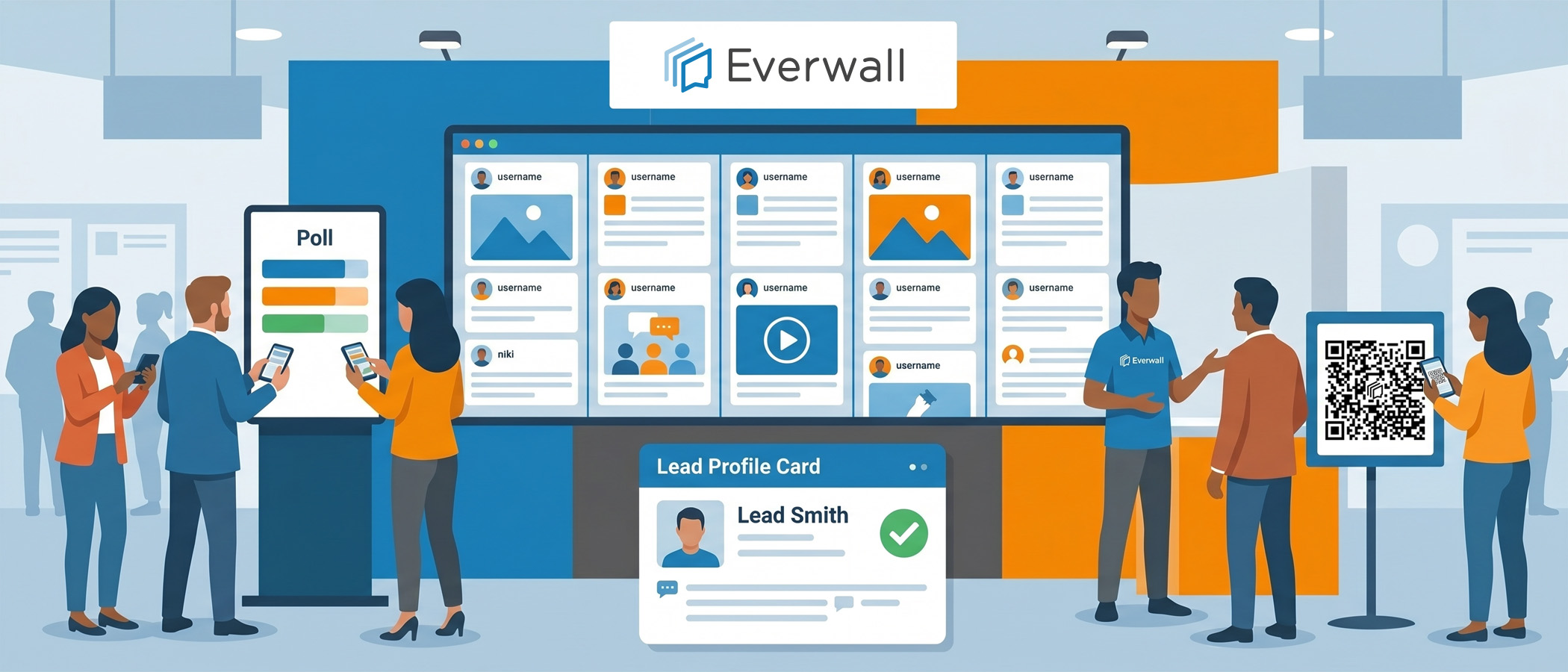
Picture a screen at your booth that shows what attendees are posting, asking, and voting on in real time. As people join in, you naturally collect a running list of the top questions being asked, the most popular topics, and the responses to your prompts. That is not just decoration. It is a live map of what your audience actually wants.
This is exactly what an event social wall from Everwall is built to do. A social wall pulls in content from 15 different sources, including X, Instagram, LinkedIn, SMS, and a simple web form called Everwall Direct, so attendees can post or answer prompts even if they do not use social media at all. Everything updates in real time, so your booth always feels active, and every contribution becomes a piece of context you can use later.
Say your wall shows that three of the top five questions were about integrations. Now your follow-up email to those people is not a generic “thanks for stopping by.” It is “You asked about integrations, here is exactly how ours work.” That kind of message gets opened and answered.
You can also embed the same wall on your website or event app at no extra cost, so people who could not make it to the booth can still take part and land on your list. If you want a deeper look at how the platform works, our overview of the event social wall platform breaks it down.
The point is simple. Participation does not just draw a crowd. It hands you the details that make follow-up worth doing.
A Simple Follow-Up Workflow for Event Lead Capture
Great data means nothing if it sits in a spreadsheet for two weeks. The strongest event lead capture systems have a follow-up plan ready before the show even starts. Here is a workable timeline.
Within 24 hours:
Reach out to your best leads while the show is still fresh in their minds. Use the context you gathered. Reference the exact question they asked or the topic they voted for. Keep it short and specific. A single relevant sentence beats a long, generic thank-you note. Sort your list by intent first, so the people who were closest to buying hear from you before anyone else.
Within 7 days:
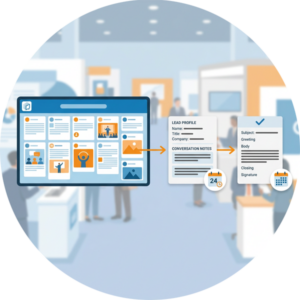 Send the rest of your follow-ups and start a second touch for your hot leads. This is a good time to share something useful tied to their interest, like a short guide, a demo link, or a case study. If someone asked about a specific feature, send them proof that it works. The goal is to keep the conversation moving, not to blast the same message to everyone.
After that first week, hand your qualified leads to sales with all the notes attached, and keep the rest in a longer nurture track. For ideas on staying connected once the event ends, our post on post-event engagement ideas has practical steps.
The reason this works is that every message points back to a real moment. You are not guessing what someone wants. You captured it when they participated, and now you are simply continuing the conversation.
Measuring the Real Return on Your Booth
If you want to know whether your trade show lead capture is working, look past the number of scans. Count how many leads had real context attached. Count how many turned into calls, meetings, and deals. That is your true event ROI.
When you tie participation to capture and capture to fast, specific follow-up, the whole thing becomes measurable. You can see which prompts pulled in the best leads, which topics drove the most interest, and which follow-ups got replies. That data helps you plan a smarter booth for the next show instead of repeating the same routine and hoping for a different result.
If you want a full framework for tracking this, our step-by-step guide on event ROI walks through how to measure and improve it.
Better lead capture starts with better participation. Give people a reason to interact, collect what they actually care about, and follow up while it still matters. Do that, and your badge scanner becomes the least important tool in your booth.
Want your booth to collect real intent instead of empty badge scans? An Everwall event social wall turns attendee questions, polls, and posts into live context you can use for smarter follow-up. Set one up for your next show and start capturing leads worth chasing.
Pretty good, right? Share this with your people.


