


LinkedIn Event Marketing Strategy for 2026 (Creator-Led Events)
Published on August 3, 2026
Most people promote events on LinkedIn the wrong way. They post a graphic with the date, time, and a registration link, then wait for sign-ups that never come. The post sits there with two likes and zero comments, and they assume LinkedIn just doesn’t work for events.
The problem isn’t LinkedIn. It’s the approach. LinkedIn doesn’t reward flyers. It rewards people who say something worth talking about. The accounts filling rooms in 2026 aren’t running ads or posting digital posters. They’re sharing opinions, telling stories, and starting conversations that pull people toward the event naturally.
This article walks you through a LinkedIn event marketing strategy built for how the platform actually works right now. You’ll get a posting structure, a way to write posts people respond to, a comment plan, and a simple two-week launch schedule you can copy.
Why Creator-Led Events Are Taking Over
For years, events were promoted by brands. A company logo posted the announcement, and that was supposed to be enough. That model is fading. People follow people, not logos. They trust a recommendation from someone they respect far more than a polished post from a company page.
 This shift has a name now: creator-led events. Instead of hiding behind a brand account, the founder, host, or organizer becomes the face of the event. They share why they’re hosting it, who it’s for, and what they hope happens in the room. The promotion feels like a conversation with a real person rather than an advertisement.
There’s a clear reason this matters on LinkedIn specifically. LinkedIn’s own data shows that posts from individual creators consistently outperform company page posts when it comes to reach and engagement, which is why the platform keeps adding tools for creators. People want to hear from a human being who has a point of view.
For planners, founders, and agencies, this changes the job. You’re not just scheduling promotional content anymore. You’re building a voice that people want to follow before, during, and after the event.
The 3-Post-Per-Week LinkedIn Structure
You don’t need to post every day to promote an event well. You need a steady rhythm of posts that each do a different job. Three posts a week works because it keeps you visible without burning you out, and it gives the algorithm enough to work with.
Here’s the structure. Each week, publish one of each:
Post 1: The POV (Point of View)
This is where you take a stand. Share an opinion about your industry, your topic, or the way things are usually done. The goal is to say something people might agree or disagree with, because that’s what gets them to respond.
A good POV post sounds like this: “Most networking events fail because they pack the schedule and leave no room for actual conversation. We built ours the opposite way.” You’re not selling tickets yet. You’re showing people how you think, which is the first step in getting them to trust the event.
Post 2: The Insight
This post teaches something. Share a useful tip, a lesson you learned, or a small piece of data that helps your audience. Insight posts position you as someone worth learning from, which makes your event feel more valuable before anyone signs up.
Keep it specific and practical. “Three things I changed about how we run panels after last year’s feedback” gives people something to take away whether or not they attend. When you teach for free, the paid event feels like a natural next step.
Post 3: The Story
People remember stories far longer than facts. This post is personal. Talk about why you started hosting this event, a moment from a past event that stuck with you, or something a past attendee said that changed how you do things.
Stories make you human, and humans are what people follow. A story post might begin with “Last year, two attendees met at our event and ended up starting a company together. That’s the whole reason I keep doing this.” That kind of post earns comments because it makes people feel something.
Rotating these three post types keeps your feed from getting repetitive. Some weeks you’ll lean harder into one type depending on where you are in the launch, but the three-part rhythm gives you a reliable backbone.
How to Write Conversation Hooks That Get Comments
The single most important number on LinkedIn isn’t likes. It’s comments. When people comment, the platform shows your post to more people, and the conversation itself becomes social proof that your event is worth paying attention to.
 To get comments, you need what’s called a conversation hook. This is a line, usually near the end of your post, that makes responding easy and tempting. A vague “What do you think?” rarely works because it asks people to do too much thinking. A good hook is specific and low-effort to answer.
Try hooks like these:
- “What’s the one thing you wish more events did differently?”
- “Have you ever left an event early? What made you walk out?”
- “Pick one: better speakers or better networking. You can only have one.”
- “Drop the best advice you ever got at a conference.”
Notice that each of these gives people a clear, small thing to say. They don’t have to write a paragraph. They can answer in a sentence, and that low bar is exactly what gets the comment count moving.
One more tip: when someone comments, reply to them. Every reply counts as activity and signals that there’s a real conversation happening. Plus, people are far more likely to register for an event hosted by someone who actually talks back.
Comment Strategy: Ride the Conversations Already Happening
Posting your own content is only half the work. The other half happens in other people’s comment sections, and most event promoters skip it entirely.
Here’s the idea. There are already conversations happening on LinkedIn about your topic, your industry, and the problems your event solves. You don’t have to start every conversation from scratch. You can join the ones that already have an audience.
Find posts from people in your space who get good engagement. When they post something relevant, leave a thoughtful comment that adds to the discussion. Don’t pitch your event. Just be useful and interesting. People will click your profile, see what you’re building, and some of them will follow along.
A few rules that keep this effective:
- Comment early. Posts get the most views in their first hour, so commenting early means more people see what you wrote.
- Add something real. A comment that just says “Great post!” gets ignored. Share an example, a counterpoint, or a question that extends the conversation.
- Be consistent. Commenting on ten relevant posts a week builds your visibility faster than almost anything else, and it costs you nothing but time.
This approach works because you’re meeting people where they already are instead of waiting for them to find you. Over a two-week launch, steady commenting can put your name in front of thousands of the right people.
Turn Event Moments Into LinkedIn Content
Here’s something most promoters miss: your event itself produces the best material for your next round of LinkedIn posts. The questions people ask, the reactions they share, the moments that get a laugh or a nod, all of it is content waiting to be used.
This is where an event social wall does double duty. Everwall’s social wall collects posts, photos, questions, and comments from your attendees in real time and displays them on a screen during the event. It pulls from 15 different sources, including LinkedIn, Instagram, X, and a simple web form, so people can participate whether or not they use a particular social network.
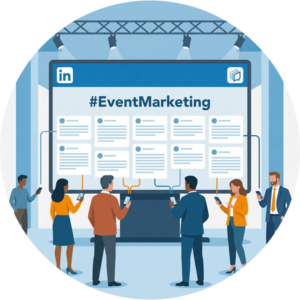 While the wall keeps the room engaged during the event, it’s also quietly building your library for afterward. Once the event wraps, you’ve got a pile of genuine attendee reactions to work with:
- Best moments become a recap post that shows newcomers what they missed.
- Top audience takes become quote posts that highlight the smartest things people said.
- Common questions become insight posts that answer what your audience clearly cares about.
That means your next event practically promotes itself, because you’re posting proof that real people found real value. If you want the content to keep working after the room empties out, you can also use the website embed that comes with the event wall to keep those highlights live on your event page or app. For more ideas on stretching event content further, the piece on post-event engagement ideas is worth a read.
A Simple 2-Week Launch Plan
You don’t need a months-long campaign. Two focused weeks of the right posting and commenting can fill seats. Here’s a plan you can follow exactly.
Week 1: Build Interest
The first week is about getting people to care, not asking them to register. You’re warming up the audience and showing them you have something worth their time.
- Monday (POV): Share a strong opinion about your topic. End with a conversation hook.
- Wednesday (Insight): Teach something useful related to your event theme. Mention the event lightly at the end.
- Friday (Story): Tell a personal story about why this event exists. Let people feel the reason behind it.
All week, spend fifteen minutes a day commenting on relevant posts from others. Reply to every comment on your own posts the same day.
Week 2: Drive Registrations
Now that people know you and care about the topic, you can ask more directly. This week leans into the event itself.
- Monday (Story): Share a moment from a past event or a sneak peek of what’s coming. Add the registration link.
- Wednesday (Insight + Offer): Post one final useful tip, then make a clear ask: “Doors are filling, here’s the link.”
- Friday (POV + Urgency): Restate the big idea behind your event and remind people it’s almost here. Make the last call easy to act on.
Keep commenting daily through week two. By now, the people you’ve been talking to in other comment sections have seen your name several times, and the direct asks land far better because they already trust you.
If you want a deeper framework for designing engagement around all of this, the event engagement plan template pairs well with this launch schedule.
The thread running through this entire approach is simple to remember: on LinkedIn, conversation creates conversions. Post like a person, talk to people in the comments, and let your event give you fresh things to say. Do that for two weeks and you’ll have a room full of people who feel like they already know you.
Ready to give your attendees something to talk about, both in the room and online? An Everwall event social wall collects posts, photos, and questions from your audience in real time and displays them live, then hands you a library of genuine moments to fuel your next round of LinkedIn posts. Set one up for your next event and watch the conversation do the work.
Pretty good, right? Share this with your people.


