


Event Gamification vs Audience Engagement: What Actually Makes People Participate
Published on February 2, 2026
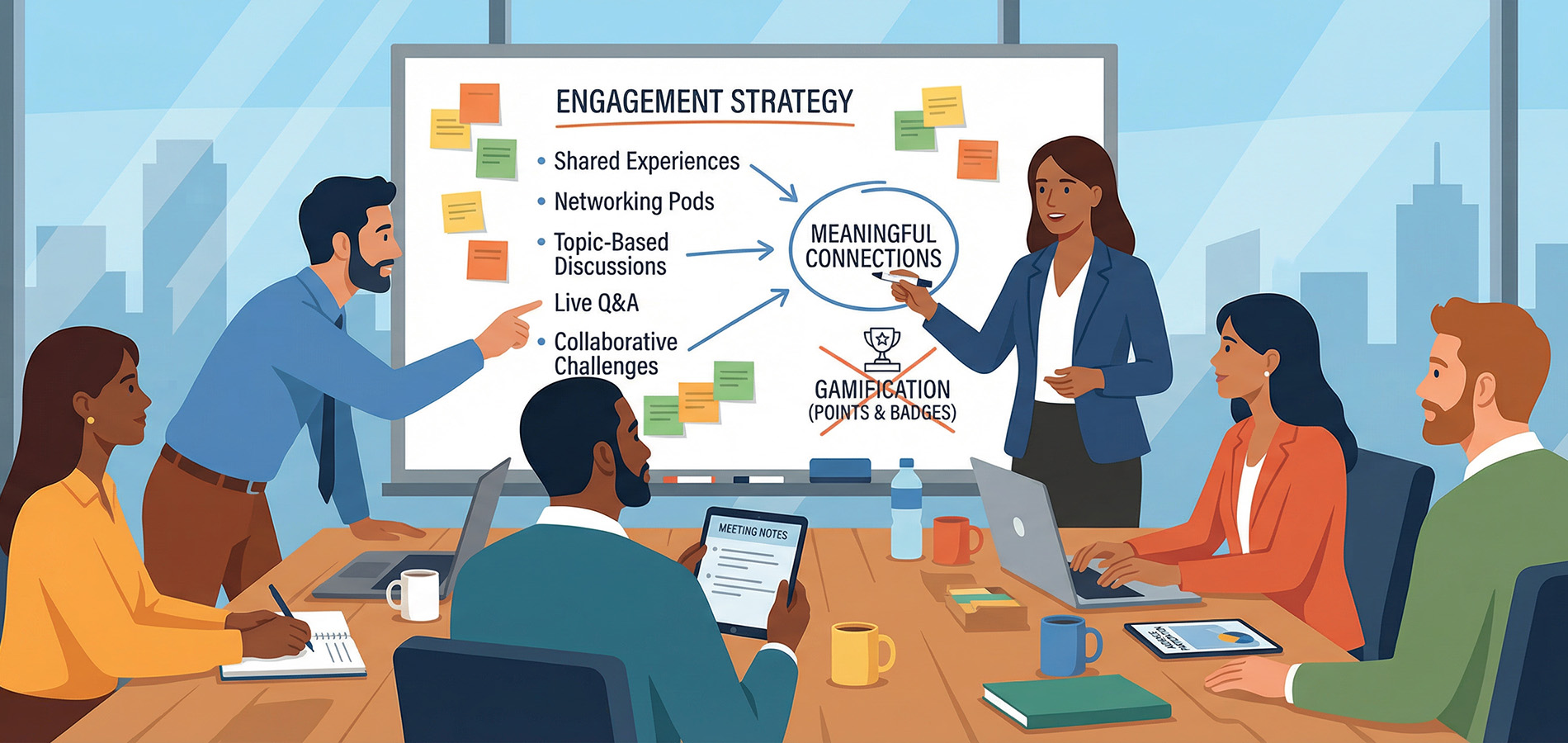
When event planners first discovered gamification, it felt like a breakthrough. Add a leaderboard. Create a points system. Watch the numbers climb. Suddenly, you had visible proof that your audience was doing something.
The appeal made sense. Event gamification gave organizers something they desperately wanted: measurable activity. You could see who posted the most, who earned the most badges, and who climbed to the top of the rankings. Sponsors loved it because they could attach their logos to high-visibility competitions. Planners loved it because it looked like engagement.
And for a while, that seemed like enough.
Points-based systems spread quickly across conferences, trade shows, and corporate gatherings. Event apps added gamification features. Social media challenges with prizes became standard. The thinking was straightforward: if you reward people for participating, more people will participate. If we can be a bit self-reflective, Everwall has helped perpetuate this this line of thinking.
But here’s what often gets overlooked. Visible activity and meaningful audience engagement are not the same thing.
Where Event Gamification Breaks Down
Gamification works beautifully for some people. Those who enjoy competition will chase points, climb leaderboards, and post frequently to win prizes. They create a lot of content and generate buzz on social media.
But what about everyone else?
At most events, the majority of attendees are not highly competitive. They came to learn, network, or simply be part of the experience. When they see a leaderboard dominated by the same five names, they often make a quiet decision: “This isn’t for me.”
 The Silent Observer Problem
When event gamification creates winners, it also creates silent observers. These are attendees who might have participated if the barrier felt lower, but who step back when participation feels like a contest they cannot win.
Consider what happens when someone arrives at a conference on day two. The leaderboard already shows participants with hundreds of points. The top spots are locked in. For a newcomer, the message is clear: you’re too late to matter.
This dynamic discourages participation from:
- Attendees who arrive late or join sessions mid-event
- People who are naturally less competitive
- First-time attendees who don’t know the rules yet
- Introverts who prefer thoughtful contributions over rapid-fire posting
The irony is that gamification, which was supposed to increase event participation, can shrink the pool of active contributors.
Performance Over Presence
There’s another issue worth considering. When you gamify participation, you shift the focus from being present to performing well. Attendees start thinking about how to earn points rather than how to engage authentically.
You might see people posting frequently but saying very little of substance. Or you might notice that the content being created serves the game rather than the conversation. Someone might send five very short posts with the event hashtag in a row instead of one thoughtful post because that’s what the rules reward, not because they have five different things to share.
This shift changes the nature of the event experience itself. The question attendees ask themselves goes from “What do I want to share?” to “What will get me points?”
What Audience Engagement Actually Requires
If gamification doesn’t always deliver real participation, what does?
The answer has less to do with prizes and more to do with psychology. People participate when three conditions are met:
Low Friction
The easier it is to participate, the more people will do it. This means removing unnecessary steps, avoiding complicated rules, and making sure attendees know exactly how to contribute.
A simple call to action like “Share your thoughts using #EventName” works better than a multi-step challenge with registration requirements and point calculations. When people don’t have to think about how to participate, they’re more likely to just do it.
Clear Prompts
People need a reason to contribute. Generic requests like “post on social media” often fall flat because they don’t give attendees something specific to respond to.
Better prompts ask real questions: “What’s your biggest takeaway from today’s keynote?” or “Share a photo of your view from the conference floor.” These invitations give people a starting point and make participation feel purposeful.
Equal Footing
This is where gamification often fails. When participation becomes a competition, only some people feel invited to play. Inclusive engagement strategies put everyone on equal footing, whether they’re a veteran attendee or someone who just walked in the door.
There’s no leaderboard to climb, no advantage for early arrivals, and no penalty for contributing once instead of twenty times. Every voice gets the same opportunity to be seen.
Audience Engagement vs. Competition
Research on participation suggests that when pressure decreases, participation increases. A study by the Community Roundtable found that recognition and belonging are stronger drivers of community engagement than competition and rewards.
This insight applies directly to events. When attendees feel like they belong to the event rather than competing at the event, they’re more likely to share, post, and connect.
Think about what motivates someone to post a photo at a conference. Usually, it’s because they want to:
- Share their experience with friends or colleagues
- Feel connected to something bigger than themselves
 Celebrate a moment that mattered to them
- See their contribution acknowledged in a public space
None of these motivations require a prize. None of them require beating someone else. They require feeling included and feeling like their contribution matters.
Inclusion Scales Better
Here’s a practical reality for event planners: inclusion scales better than competition.
A gamified event might generate 500 posts from 25 highly competitive attendees. An inclusive approach might generate 400 posts from 150 different attendees. The second scenario creates broader participation, more diverse content, and more attendees who feel like active participants rather than spectators.
It also creates better outcomes for sponsors. A sponsor logo shown next to content from 150 different people reaches a wider network than the same logo attached to posts from the same 25 super-users.
Creating Space for Different Kinds of Participation
Not everyone participates the same way. Some attendees are natural content creators who love posting photos and commentary. Others prefer to share a single thoughtful reflection. Some want to cheer on their colleagues. Others just want to see what everyone else is saying.
Effective audience engagement tools make room for all of these modes. They don’t punish people for participating less frequently, and they don’t reward volume over substance.
When you display attendee content in real time, you create a feedback loop that encourages participation without creating competition. Someone sees their post appear on a screen and feels acknowledged. Someone else sees their colleague’s post and decides to share their own. The cycle continues without anyone keeping score.
This is the approach that Everwall recommends with social walls for events that want to focus on connections. Content from attendees appears in real time without rankings, without leaderboards, and without pressure. Every post gets equal visibility, whether it comes from the most active participant or someone contributing for the first time.
The result is an event experience that feels welcoming to everyone, not just the people who are naturally competitive.
When Gamification Makes Sense (and When It Doesn’t)
To be clear, gamification isn’t always wrong. There are situations where it works well:
- Events with a naturally competitive audience (sales teams, gaming communities)
- Short activations and/or experiential activations where quick bursts of activity are the goal
- Challenges designed for small groups where everyone has a real chance to win
- Situations where the prize is genuinely valuable and worth competing for
 For events like these, Everwall does have gamification options like leaderboards that can work well.
But for most events, especially those with diverse audiences and longer timeframes, gamification creates more barriers than it removes.
The question to ask isn’t “How can we gamify our event?” but “How can we make participation feel natural and rewarding for as many people as possible?”
Building an Engagement Strategy That Works
If your goal is broad event participation rather than concentrated activity from a few super-users, consider these principles:
- Remove barriers to entry. Make it easy to participate with a simple hashtag, a clear prompt, or a direct submission form. Everwall supports 15 different content sources, including direct web form submissions and SMS, so attendees can contribute however feels most comfortable to them.
- Display contributions publicly. When people see their content featured on a social wall, they feel recognized. That recognition encourages more participation without requiring prizes or points.
- Rotate visibility. Rather than highlighting top contributors, cycle through all submissions so everyone gets a moment in the spotlight.
- Ask real questions. Give attendees something specific to respond to. “What surprised you today?” works better than “Post about our event.”
- Celebrate presence, not performance. Acknowledge participation without ranking it. Thank attendees for contributing without declaring winners and losers.
These strategies create what researchers call psychological safety, the feeling that you can contribute without risk of embarrassment or failure. When attendees feel safe participating, they’re more likely to do it.
For more ideas on creating connected experiences, the conference engagement tools guide covers additional approaches worth exploring.
Rethinking What Success Looks Like
A more meaningful metric is participation breadth: how many different attendees contributed? This number tells you whether your engagement strategy is reaching the whole audience or just a small subset.
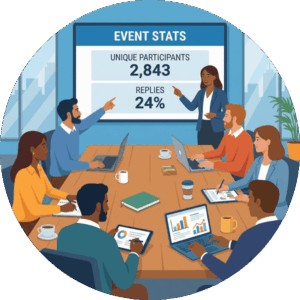 Another useful metric is sentiment — not just volume. It shows whether attendees are sharing positive experiences, connecting with each other, and creating content they’re proud to stand behind.
These outcomes matter more than leaderboard rankings because they reflect the actual quality of the event experience. They also close the engagement gap between passive attendees and active participants.
A Different Approach to Event Experience
The events that leave lasting impressions aren’t usually the ones with the best prizes or the most elaborate games. They’re the ones where attendees felt like they belonged, where their presence mattered, and where they had the chance to participate on their own terms.
Event gamification promised to solve the engagement problem by turning participation into a game. But for many attendees, games create pressure rather than invitation.
The alternative is simpler: create opportunities for everyone to contribute, acknowledge those contributions publicly, and remove the barriers that make people hesitate.
When participation doesn’t require competition, more people get involved. Without rankings defining engagement, more voices feel welcome. And when the event experience is designed around inclusion rather than performance, the results speak for themselves.
Does your engagement strategy encourage participation or performance?
Ready to create an event experience where every attendee feels invited to participate? Everwall’s event social wall displays real-time content from your audience without rankings or competition, making it easy for everyone to join the conversation and see their contributions celebrated.
Pretty good, right? Share this with your people.


