


The Engagement Gap
Published on January 5, 2026
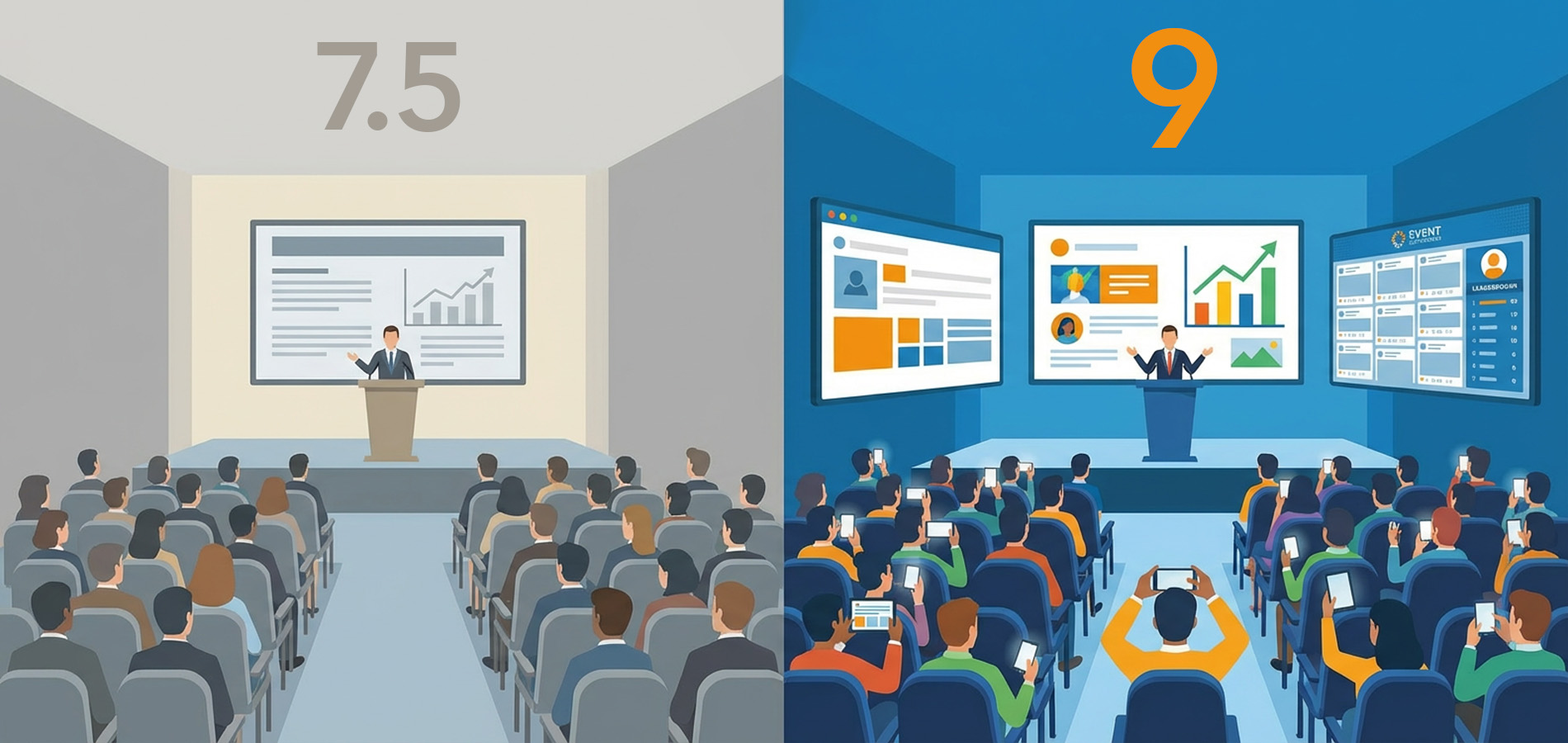
The venue was stunning. Speakers nailed their presentations. Catering delivered on time, and every logistical detail fell into place. By any reasonable measure, your event was a success.
However, when the post-event surveys roll in, a different picture begins to emerge. The average score? A respectable 7.5 out of 10. Comments like “it was good” and “enjoyed the sessions” fill the feedback forms. But something’s missing. Nobody’s posting about it on social media. Attendees aren’t asking when the next one is. The event came and went without leaving much of a mark.
This is the Engagement Gap: the space between running an event that works and creating one that people actually remember. It’s the difference between an audience that attended and a community that participated. And for event planners heading into 2026 with Q1 and Q2 events on the calendar, understanding this gap could be the difference between “fine” and “unforgettable.”
What Makes an Event Memorable Instead of Just “Good”
Most events follow a predictable pattern. Attendees arrive, find their seats, listen to presentations, eat lunch, attend more sessions, and leave. They’re physically present but emotionally checked out. They’re watching the event happen rather than being part of it.
 The difference between a forgettable event and a memorable one often comes down to a single question: did attendees feel like audience members, or did they feel like participants?
Seeing their tweet displayed on a screen in front of hundreds of people creates an immediate shift. An attendee whose photo appears in a live gallery stops being a passive observer and becomes part of the story. When a crowd votes together on what topic to discuss next, they’ve collectively shaped the experience.
This psychological shift is powerful.
As a result, events that reflect attendees back to themselves move from “their event” to “our event”. That sense of ownership creates emotional investment. And emotional investment is what separates a score of 7.5 from a score of 9.
Think about the events you remember most vividly. Chances are, you weren’t just sitting in the audience. You were somehow woven into the fabric of what happened. That’s what attendee engagement really means: creating moments where people see themselves as contributors, not just consumers.
Why Most Events Default to Forgettable
If active participation creates better events, why don’t more planners prioritize it? The answer isn’t that planners don’t care. It’s that the entire system of event planning is built around risk mitigation.
Event planners spend most of their time and budget on the things that absolutely cannot go wrong.
As a result, these non-negotiables consume enormous amounts of attention and resources.
Here’s the typical planning timeline:
- Months out: Venue, date, budget, speakers
- Weeks out: Catering, A/V, registration, logistics
- Days out: Final confirmations, troubleshooting, contingency planning
- Event day: Execution, problem-solving, keeping everything on track
So what’s missing?
In practice, engagement tools and participation strategies often get pushed to the “nice to have” category. They’re the items that get considered only after everything essential is locked in. By that point, there’s limited budget and even less bandwidth to implement them thoughtfully.
The result is predictable. Events run smoothly because planners are excellent at logistics. But they don’t create lasting memories because the elements that generate emotional connection were treated as optional extras.
This isn’t a criticism of how planners work. It’s a recognition that the standard event planning framework doesn’t naturally prioritize the things attendees actually remember. Food quality fades from memory within days. Smooth check-in is forgotten by the first session. But the moment someone saw their name on the big screen? That sticks.
The Shift: From Audience to Participant
The fundamental change required isn’t complicated, but it does require intentional design. Stop building events for attendees. Start building events with them.
The best events don’t just have an audience. They have participants.
When people contribute to an experience, they become invested in its success. A keynote speaker can be brilliant, and attendees will appreciate it. But when attendees’ own voices, photos, and thoughts become part of the event’s visible tapestry, appreciation turns into ownership.
Visibility is the key mechanism here. Collecting feedback in a database doesn’t create engagement. Collecting that same feedback and displaying it where everyone can see it does. The difference is whether participation feels like shouting into a void or like contributing to something shared.
 When attendees see themselves in your event, it becomes theirs.
This shift has practical implications beyond just creating warm feelings. Engaged attendees become advocates. They talk about the event to colleagues. They share content on their own social channels. They return the following year and bring others with them. The return on investment isn’t just measured in satisfaction scores; it’s measured in organic reach, repeat attendance, and word-of-mouth promotion that no marketing budget can buy.
Smooth is the baseline. Memorable is the goal.
Logistics form the foundation you’ve already mastered. They’re necessary but not sufficient. What you build on top of that foundation determines whether your event gets a polite nod or genuine enthusiasm.
Practical Ways to Close the Engagement Gap
Closing the Engagement Gap doesn’t require scrapping your entire approach or adding massive new budget lines. It requires weaving participation into what you’re already doing.
Create Visible Participation Moments
The most effective event engagement strategies share one characteristic: they make participation visible to everyone in the room. A social wall that displays attendee posts in real-time turns individual contributions into a collective experience. Live polling where results appear on screen transforms a simple question into a shared discovery. Photo displays that cycle through attendee-submitted images make every person in the room a potential featured contributor.
Tools like Everwall’s social walls aggregate posts from platforms like Instagram, X, LinkedIn, and others, displaying them live during your event. When someone sees their post featured on the main stage screen, it validates their participation and encourages others to join in.
The principle is straightforward: don’t just collect participation. Display it.
Give Attendees a Reason to Post
A hashtag alone isn’t enough. People need to know their content will actually be seen. When someone posts using your event hashtag and then sees that post appear on screens throughout the venue, they’re likely to post again. They also tend to nudge the person next to them to participate.
This creates a flywheel effect:
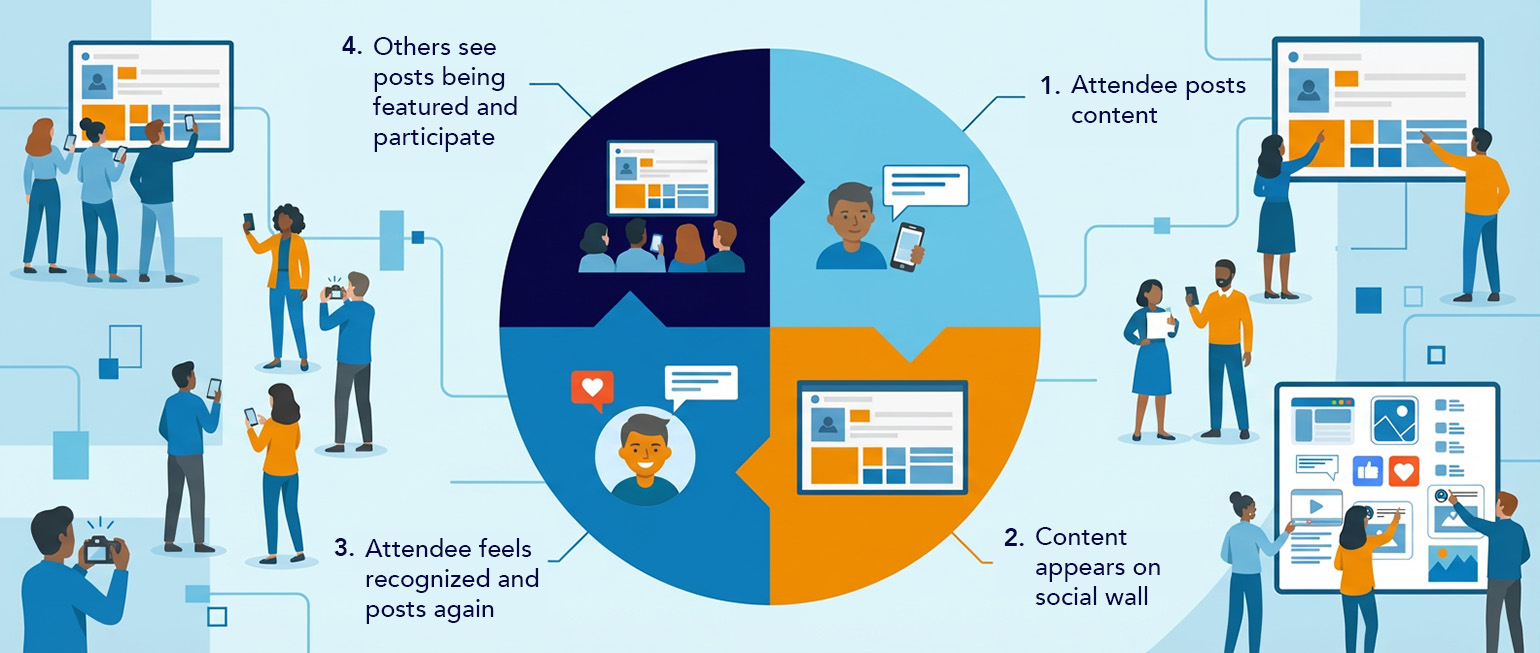
- Attendee posts content
- Content appears on visible displays
- Attendee feels recognized and posts again
- Others see posts being featured and decide to participate
- More content generates more visibility, which generates more content
The cycle sustains itself once it starts. But it requires that initial visibility mechanism to get spinning.
Design at Least One Collective Moment
Some of the most memorable event experiences happen when an entire room does something together. This could be as simple as a synchronized photo moment where everyone holds up their phones with flashlights on. It could be a live vote that actually shapes what happens next in the agenda. It could be a group activity that requires collaboration across tables.
Collective experiences create shared memories. And shared memories are what people talk about when they return to the office. “You won’t believe what we all did at the conference” is a much better story than “the sessions were pretty good.”
For ideas on creating spaces that naturally encourage these kinds of moments, check out our recent article on event lounges and how they can become engagement hubs that attendees actually want to spend time in.
Extend Engagement Beyond the Live Event
The content attendees create during your event doesn’t have to disappear when the closing remarks end. Embed a social media hub on your website to keep the conversation visible. Use the best user-generated content in your post-event recap emails. Feature standout posts in next year’s marketing materials to show prospective attendees what the experience feels like.
This approach serves multiple purposes. It rewards participants by giving their content extended life. It provides authentic marketing material that feels more genuine than staged promotional photos. And it creates a bridge between this year’s event and next year’s, keeping your community engaged even during the off-season.
For a deeper dive into conference-specific approaches, our complete guide to conference engagement tools covers additional strategies worth considering.
Closing the Gap
The measure of a great event isn’t whether everything went smoothly. Smooth operations are expected. What ultimately matters is whether attendees remember how the event made them feel.
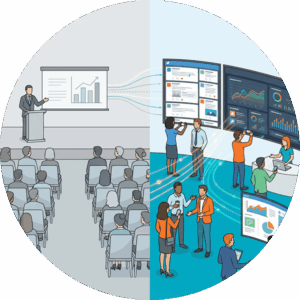 Logistics create the container. Engagement creates the contents worth remembering.
The Engagement Gap is real, and it explains why so many technically successful events leave both planners and attendees feeling vaguely unsatisfied. But the gap is closable. It requires shifting some attention from what could go wrong to what could go right. From preventing problems to creating moments.
As you finalize plans for your upcoming events in 2026, ask yourself: where am I creating space for participation, not just attendance? Where will attendees see themselves reflected in the experience? What will they tell their colleagues when they get back to the office?
The answers to those questions will determine whether your next event scores a 7.5 or a 9.
Ready to close the Engagement Gap at your next event? Everwall’s event social walls make it easy to display attendee posts from Instagram, X, LinkedIn, and more in real-time. Explore how Everwall can help you close your event’s engagement gap.
Pretty good, right? Share this with your people.


